Author: Play Eat Stay Japan

  • 5 Family-Friendly Restaurants in Shinagawa

    5 Family-Friendly Restaurants in Shinagawa

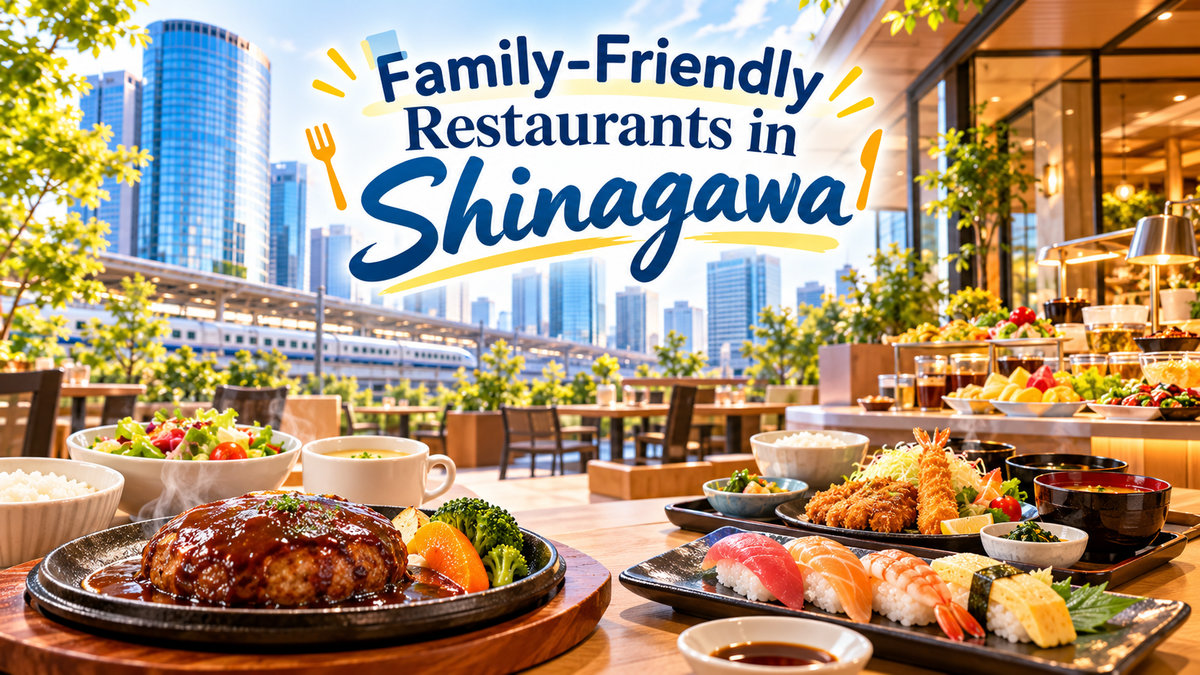
    Shinagawa is convenient for sightseeing in Tokyo and traveling by Shinkansen. When choosing somewhere to eat with children, it helps to check which side of the station you’re on. The Takanawa Exit, near Aqua Park, and the Konan Exit, near the Shinkansen gates, have different convenient dining options.

    Around Shinagawa Station, you can experience Japanese food culture through yoshoku-style hamburg steak, balanced Japanese set meals, and sushi prepared by skilled chefs.

    Beyond Japanese cuisine, there are Brazilian churrasco restaurants where meat is carved at your table and hotel buffets offering both Japanese and Western dishes. These are also great options if you want a meal to become a memorable part of your family trip.

    Here are five restaurants near Shinagawa Station that are easy for families visiting Japan for the first time to consider. I’ve also included a casual food court and places to take a break around Takanawa Gateway.


    1. Tsubame KITCHEN, Atre Shinagawa | Try Japanese-Style Hamburg Steak

    Best for families who:

    • Have children who are not yet familiar with Japanese food
    • Want to eat near the station before or after a Shinkansen journey
    • Want to dine on the Konan Exit side
    • Want to start exploring Japanese food with something that looks familiar

    Key features:

    • Located on the fourth floor of Atre Shinagawa
    • Convenient for the Konan Exit
    • Part of Tsubame Grill, a long-established yoshoku restaurant group in Japan
    • Japanese-style Western food centered on Hamburg steak
    • Meat dishes that both adults and children can enjoy
    • Convenient for combining shopping and dining

    Japanese “hamburg steak” is a round patty made from ground meat and cooked as a standalone dish, rather than served inside a hamburger bun. Tsubame KITCHEN serves this popular Japanese-style Western cuisine. Because the food looks familiar, it’s an easy restaurant to introduce to children trying Japanese food for the first time.


    2. Ootoya, Shinagawa Grand Passage | Enjoy a Balanced Japanese Set Meal

    Best for families who:

    • Want to experience a Japanese meal with rice and side dishes
    • Want to choose meals with nutritional balance in mind
    • Want to choose food their children can eat comfortably
    • Want Japanese home-style flavors at an approachable price

    Key features:

    • Located on basement level 1 of Shinagawa Grand Passage
    • Approximately five minutes on foot from Shinagawa Station
    • Specializes in teishoku, Japanese set meals combining rice with a main dish and other items
    • A casual Japanese restaurant offering home-style dishes
    • Takeout is also available

    Ootoya is a chain where you can casually enjoy teishoku, a popular style of Japanese meal. A teishoku typically combines rice with a main course and side dishes. It’s a good choice for travelers who want to try dishes similar to Japanese home cooking.

    The menu offers choices of meals built around meat, fish, and rice. If your family has been eating lots of fried foods or sweets during the trip, it can be easier to choose a meal with nutritional balance in mind.

    The area has many offices, so the restaurant may be busy at lunchtime on weekdays. Takeout is another option if you would rather eat back at your hotel.


    3. Tsukiji Sushiko, Shinagawa Intercity | Experience Sushi Made by Japanese Chefs

    Best for families who:

    • Want to try authentic sushi in Japan
    • Want a quieter sushi restaurant experience rather than conveyor-belt sushi
    • Want to ask about options for children who don’t enjoy raw fish

    Key features:

    • Located on the third floor of Shinagawa Intercity, Tower A
    • Convenient for Shinagawa Station’s Konan Exit
    • Serves Edomae-style sushi prepared by sushi chefs
    • You can consider set meals or order your preferred sushi toppings
    • An opportunity to experience Japanese sushi culture as a family

    If you’ve come all the way to Japan and want to try sushi made by professional chefs, this is an option for your family. Unlike a conveyor-belt sushi restaurant, Tsukiji Sushiko offers a more relaxed setting where you place your order and enjoy Edomae-style sushi.

    Choosing their favorite sushi toppings can be fun for children. If your child doesn’t eat raw fish yet, you can choose options such as tamago (egg), sushi rolls, or cooked dishes.

    Some Japanese sushi contains wasabi. For children, ask for “wasabi nuki” (no wasabi).


    4. Barbacoa, Takanawa | Enjoy Churrasco Carved at Your Table

    Best for families who:

    • Want to enjoy a meat-focused meal with their children
    • Enjoy watching food being brought to the table
    • Want a change from Japanese cuisine or a restaurant for a family celebration

    Key features:

    • Located within Wing Takanawa, with convenient station access
    • Specializes in Brazilian-style barbecue called churrasco
    • Staff carve meat for you at the table
    • You can also enjoy the salad bar
    • You can ask about children’s chairs and other needs when booking

    Although it isn’t a Japanese restaurant, Barbacoa is an interactive dining experience I’d recommend for families visiting from abroad. With churrasco, staff bring large cuts of meat to your table and carve them in front of you—something that can make mealtime especially fun for children.

    Your family can try small portions of various cuts and discover their favorites. The salad bar also gives you the option to add vegetables and other dishes alongside the meat.

    When booking, you can tell the restaurant your children’s ages and request items such as kids’ chairs, baby beds, and dining cushions.


    5. LUXE DINING HAPUNA | A Hotel Buffet with Choices for Everyone

    Best for families who:

    • Have different food preferences among adults and children
    • Want to combine a visit to Aqua Park with a meal
    • Want to sample both Japanese and Western dishes
    • Want to spend a little more on a special meal during the trip

    Key features:

    • Located on the first floor of Shinagawa Prince Hotel’s Main Tower
    • A wide range of Japanese and Western buffet dishes
    • Live cooking stations
    • A hotel dining experience that includes desserts
    • Convenient to combine with outings around the Takanawa Exit

    Some parents may want to try Japanese food, while their children prefer familiar dishes. LUXE DINING HAPUNA is handy when everyone wants something different. You can choose from Japanese and Western food and try small portions of unfamiliar dishes, too.

    Watching dishes being prepared at the live cooking stations is part of the fun. The lively, elegant atmosphere can turn a meal between sightseeing activities into a special family experience.

    The restaurant is on the same hotel grounds as Maxell Aqua Park Shinagawa, making it convenient for lunch or dinner on a day at the aquarium.

    It costs more than a casual restaurant.


    Bonus: Shinagawa Kitchen Food Court for Families with Different Preferences

    If you don’t want to wait a long time at a restaurant, or your children can’t decide what to eat, the Shinagawa Kitchen food court at Shinagawa Prince Hotel is another convenient option.

    At a food court, family members can order different dishes from several vendors and eat together in a shared seating area. Everyone doesn’t need to choose the same type of food.

    However, seating may fill up during busy lunch and dinner periods. Going a little earlier can make things easier.

    Dividing up seating, ordering, and food collection between adults can help when you’re with young children.

    Bonus: Where to Eat and Rest While Exploring Takanawa Gateway

    If you’re visiting Komorebira, MoN Takanawa, or other attractions around Takanawa Gateway, consider taking a break at a nearby café or restaurant instead of going all the way back to Shinagawa Station.

    For example, MoN Takanawa lists a dining venue called MoN Kitchen by Spiral, where you can stop for pasta, desserts, or soft drinks.

    Stopping for food or a break while watching trains and exploring the buildings can help you sightsee at your child’s pace. If you’re shopping at NEWoMan Takanawa, it’s also useful to check where the restaurants are beforehand.

    These are additional stops, separate from the five featured restaurants. Check opening information, current menus, and dishes your children can eat before choosing.

    Tips for Families Visiting Shinagawa from Overseas

    Shinagawa Station is large, so thinking about both the food you want and which side of the station you’re on can save unnecessary walking.

    This is especially helpful when you’re traveling with a stroller or large bags. Choose somewhere on the same side as your hotel or sightseeing destination when possible.

    Takanawa Exit side: Barbacoa, HAPUNA, and Shinagawa Kitchen before or after visiting Aqua Park

    Konan Exit side: Tsubame KITCHEN, Ootoya, and Tsukiji Sushiko before or after a Shinkansen trip

    Weekday lunchtime can be busy with office workers, while weekends also bring sightseers. If you have a tight schedule, reserve a table where possible or plan to eat a little earlier.

    Policies on high chairs, strollers, and food allergies vary by restaurant. If you’re not comfortable speaking Japanese, you can show staff a note describing what equipment or ingredients you need. If someone has a severe allergy, confirm the restaurant can accommodate it before ordering.


    Final Thoughts: Enjoy Japanese Food in Shinagawa with Your Kids

    Shinagawa offers a wide range of dining options, from Japanese-style Western food, teishoku set meals, and chef-made sushi to churrasco and hotel buffets that families can enjoy together.

    Choose according to your sightseeing schedule and your family’s tastes.

    • Tsubame KITCHEN: For families who want to try Japanese-style Hamburg steak
    • Ootoya: For families who want balanced Japanese set meals
    • Tsukiji Sushiko: For families who want sushi prepared by Japanese chefs
    • Barbacoa: For families who want to watch meat carved at the table
    • HAPUNA: For families who want to choose from both Japanese and Western dishes

    On days when you’re short on time or family preferences differ, Shinagawa Kitchen is another option. When sightseeing around Takanawa Gateway, local cafés are worth considering. Adjust your plans to your child’s energy level.

    Check opening days, menus, and facilities for children before visiting, and choose a restaurant where the whole family can enjoy eating in Japan.
  • Why Shinagawa Is a Great Place to Stay in Tokyo with Kids

    Why Shinagawa Is a Great Place to Stay in Tokyo with Kids

    When traveling around Tokyo with children, getting to your hotel on arrival day and leaving on the last day matters just as much as being close to sightseeing attractions.

    Managing suitcases and a stroller while making multiple transfers at unfamiliar stations can be exhausting. Shinagawa is one area worth considering for families in this situation.

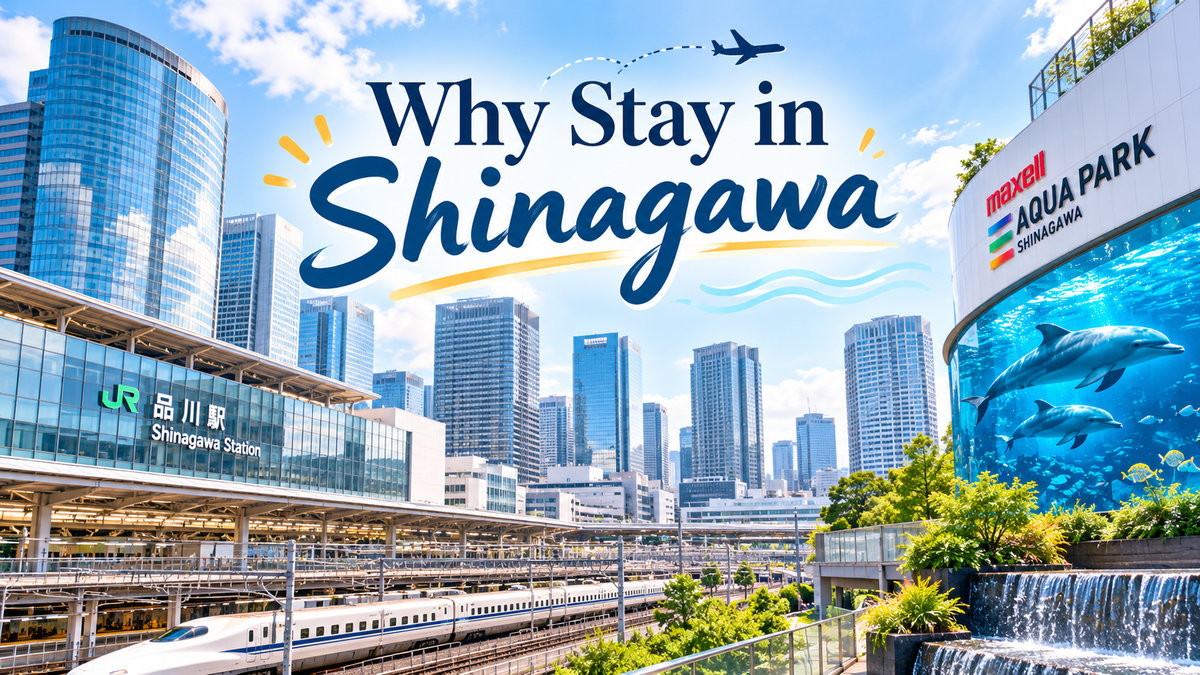
    Shinagawa has convenient access to Haneda Airport and the Tokaido Shinkansen, and it’s easy to head out for sightseeing around Tokyo. There is also an aquarium near the station that children can enjoy.

    If you go a little farther to Takanawa Gateway, you’ll find new shopping facilities where families can spend time together and a museum where children can watch trains.

    Shinagawa combines convenient transport with things to do close to your hotel. It’s a useful area for families who don’t want to pack too much into their itinerary.

    It’s especially suitable for families who want to:

    • Minimize train transfers between Haneda Airport and their hotel
    • Visit Tokyo as well as Kyoto or Osaka using the Shinkansen
    • Include activities children love, such as aquariums and trains
    • Return to the hotel for breaks between sightseeing activities

    What Is Shinagawa Like? Start by Checking the Station Exits

    This guide covers the Takanawa Exit and Konan Exit areas around Shinagawa Station, as well as the neighboring Takanawa Gateway Station area.

    Shinagawa is a large transport hub. The side of the station where you stay can change how easy it is to get to restaurants and activities.

    Rather than choosing a hotel just because it says “a few minutes’ walk from the station,” check the route from the ticket gates and where the elevators are.

    Here is a general overview:

    • Takanawa Exit (west side): Convenient for Shinagawa Prince Hotel and Aqua Park
    • Konan Exit (east side): On the Shinkansen side, with easy access to Atre Shinagawa and restaurants in the office district
    • Upper Takanawa hillside: Suits families who want a quieter stay at a hotel with a garden
    • Around Takanawa Gateway Station: Shopping, activities, and walks at NEWoMan Takanawa and MoN Takanawa
    • Gotenyama area: Offers a greener setting, but you may want to plan for a bus ride to the hotel

    Not every attraction in Shinagawa is clustered right outside the station. Match your hotel and activities to how far your children can comfortably walk.

    There are hills on the Takanawa Exit side as well. If you’re using a stroller, consider how difficult the trip will be in both directions.


    1. Easy Access to Haneda Airport and the Tokaido Shinkansen

    One of Shinagawa’s biggest advantages is how easy it is to connect to major gateways for your trip.

    From Haneda Airport, Keikyu trains heading toward Shinagawa are convenient. You can choose a service that reaches Shinagawa without transfers.

    Haneda Airport → Keikyu train toward Shinagawa → Shinagawa Station

    Destinations and travel times vary by train, so check the signs at the airport before boarding. Allow enough time for baggage collection and the walk to the station when planning your arrival at the hotel.

    You can check train routes using Keikyu’s Shinagawa Station information.

    There are also several benefits if you plan to use the Tokaido Shinkansen:

    • You can depart from Shinagawa Station for Kyoto and Shin-Osaka
    • After leaving the Shinkansen, you can stay nearby without traveling to another Tokyo station
    • It’s easy to combine Tokyo sightseeing with a Kansai trip in one itinerary

    Having fewer travel steps is especially helpful on arrival and departure days, when children may be tired.

    Even hotels close to the station can take time to reach from the platforms or gates. On Shinkansen travel days, allow time for elevators and shopping.


    2. Convenient for Tokyo Sightseeing and Flexible Itineraries

    From Shinagawa, you can reach major parts of Tokyo using the JR Yamanote Line and other trains.

    It’s especially suitable for families who want to explore several neighborhoods rather than travel to the same place every day.

    • To Shibuya or Shinjuku: Take the Yamanote Line
    • To Tokyo Station or Ueno: Use the Yamanote Line or other services
    • To Takanawa Gateway: One stop away on the Yamanote Line

    Choosing destinations without transfers can make traveling with children easier.

    For example, you could plan your days like this:

    • Arrival day: Drop off luggage and eat near the station
    • Sightseeing day: Explore Tokyo in the morning and return to the hotel for an afternoon break
    • Relaxed day: Visit Aqua Park or Takanawa Gateway

    Some destinations, such as Asakusa and theme parks, require transfers. If you already know where you want to go, check the route from your hotel beforehand.


    3. Different Hotel Options for Different Family Travel Styles

    Shinagawa has large hotels by the station, hotels with gardens, and hotels with views from upper floors. Each offers a different experience.

    Rather than treating all “family-friendly” hotels as the same, choose according to what would make your trip easier.

    • Want to visit Aqua Park: Choose a hotel on the Takanawa Exit side
    • Prioritizing Shinkansen travel: Choose a hotel near the Konan Exit
    • Want to enjoy time at the hotel: Look for a garden or more spacious rooms
    • Want to explore Takanawa Gateway: Consider a hotel between the two stations

    If your children love trains, a room with a train view can also be exciting. However, views depend on the room’s location and booking plan.

    Simply requesting a “room with a train view” doesn’t guarantee one, so check whether a guaranteed-view plan is available.

    When booking for a family, these four details are important:

    • Maximum room occupancy, including your children’s ages
    • Ages and number of children allowed to share beds
    • How much space remains after adding an extra bed
    • Children’s breakfast charges and conditions for borrowing baby equipment

    For specific recommendations, see our guide to five family-friendly hotels in Shinagawa.


    4. Nearby Family Outings at Aqua Park and Takanawa Gateway

    Shinagawa isn’t just about convenient transport. You can also plan a nearby activity day based on your children’s interests and the weather.

    Maxell Aqua Park Shinagawa: Enjoy Dolphin Performances

    Maxell Aqua Park Shinagawa is an urban aquarium about a two-minute walk from Shinagawa Station’s Takanawa Exit, on the grounds of Shinagawa Prince Hotel.

    With mostly indoor exhibits, it’s a good option for rainy or hot days. One of the highlights for families is a dolphin performance combining the dolphins with lights and music.

    • Observe the aquarium animals at your child’s pace
    • Make the dolphin performance a highlight of your trip
    • Eat nearby and take breaks before or after the aquarium
    • Choose a nearby hotel and return to your room soon after playing

    Check the official event schedule for performance times and admission details. Front seats may get splashed, and children who are sensitive to darkness or loud sounds may need a more carefully chosen seat.


    NEWoMan Takanawa “Komorebira”: Play and Shop Together

    At NEWoMan Takanawa in front of Takanawa Gateway Station, “Komorebira” on the fifth floor of the South building has an indoor PARK combining play and art.

    It’s a place where children can touch things and move their bodies, making it a good stop for kids who would get bored with shopping alone. The facility’s introduction also shows families enjoying the space.

    Because the shopping complex is large, it’s easier to explore if you decide which floors to visit and where to rest first. Check the opening hours and rules for the PARK and nearby shops separately.


    MoN Takanawa: Train Views and Cultural Experiences

    One highlight in MoN Takanawa’s facility guide is the third-floor Train Terrace, where visitors can watch moving trains and a rail vehicle center. It’s a fun stop for children who love trains.

    Inside, you’ll also find “Tatami,” a roughly 100-tatami-mat space where visitors remove their shoes, along with exhibition and workshop areas.

    You can plan a day focused on exhibitions or just a short visit centered on the terrace.

    • For train lovers, head to the Train Terrace first
    • For children who enjoy cultural activities, look for age-appropriate programs
    • When you’re tired, take a break at a café inside

    Some exhibitions and activities require fees or reservations. Tatami is not an always-open kids’ room, so check the programs and public access arrangements for the day of your visit.


    5. Easy to Fit Dining and Shopping into Your Day

    When traveling with children, even looking for a place to eat at the end of the day can take effort. Shinagawa has restaurants in station buildings and hotels, so it’s easy to plan meals around travel.

    Near the Konan Exit, start with Atre Shinagawa or Shinagawa Intercity; near the Takanawa Exit, look around Shinagawa Prince Hotel.

    • Have lunch at a yoshoku restaurant near the station before traveling
    • Choose a familiar-style rice-and-side-dish meal at a Japanese set-meal restaurant
    • Let everyone choose what they like at a hotel buffet
    • Use a food court when family members want different meals

    We’ve collected recommended places in our guide to five family-friendly restaurants in Shinagawa.

    Some restaurants are busy with office workers at weekday lunchtime and with sightseers or shoppers on weekends. Plan to eat a little early, before your children become very hungry.


    How to Get to Shinagawa from the Airports

    From Narita Airport

    By Train

    If you’re traveling with luggage, the Narita Express stopping at Shinagawa is one option.

    Narita Airport → Narita Express service stopping at Shinagawa → Shinagawa Station

    • Reserved seating makes it suitable for families who want to sit down after a long flight. Check the stops and booking requirements for your specific train.
    • Routes via the Keisei Line, Toei Asakusa Line, and Keikyu Line are also possible, but transfers may be needed depending on the service. Compare travel time and the number of transfers, not just the fare.

    By Airport Bus

    If an airport bus to your hotel is operating on your travel date, you can avoid walking from the station with large bags.

    • However, not every hotel has a direct bus.
    • Check which hotels are served, operating dates, and frequency before making your plans.

    Road traffic can affect arrival times, so choose a service with plenty of time to spare when traveling to the airport.


    From Haneda Airport

    By Train

    A Keikyu train that reaches Shinagawa without transfers is an easy option.

    Your Haneda Airport terminal → Keikyu Line → Shinagawa Station

    • The stations serving Terminals 1 and 2 and Terminal 3 are separate. On your return journey, double-check your airline’s departure terminal.
    • You can check current schedules and destinations in Keikyu’s route and station information.

    By Taxi

    • If your child is asleep or you have lots of luggage, taking a taxi directly from the airport to the hotel is another option.
    • It’s more expensive than the train, but you can be dropped off at the entrance. Ask about vehicle size and child car seat availability when booking.

    Travel time and fares depend on traffic, time of day, and hotel location. Allow for congestion if you have a departing flight.


    Who Should Consider Staying in Shinagawa?

    Shinagawa is a strong option if your trip matches the following travel styles:

    ✓ Using Haneda Airport; ✓ Traveling around Tokyo and Kansai by Shinkansen; ✓ Wanting to visit an aquarium; ✓ Having children who love trains; ✓ Combining sightseeing with hotel breaks; ✓ Wanting to explore the new Takanawa Gateway district


    Final Thoughts: Easier Travel and Family Memories Close to Your Hotel

    Shinagawa is a convenient Tokyo base for families who value easy access to airports and the Shinkansen.

    Adding Aqua Park and outings around Takanawa Gateway makes the stay about more than just transport.

    Its five main strengths are:

    • Access to Haneda Airport and the Tokaido Shinkansen
    • Rail connections to major areas around Tokyo
    • Hotel choices to suit different family travel styles
    • Family activities at Aqua Park and Takanawa Gateway
    • The ability to fit dining and shopping around travel

    When choosing a hotel, check the station exit, slopes along the route, and how many people the room can accommodate.

    For families who want a mix of days spent exploring farther afield and days enjoying nearby activities at a slower pace, Shinagawa is a good choice.

  • 5 Best Family-Friendly Hotels in Shinagawa

    5 Best Family-Friendly Hotels in Shinagawa

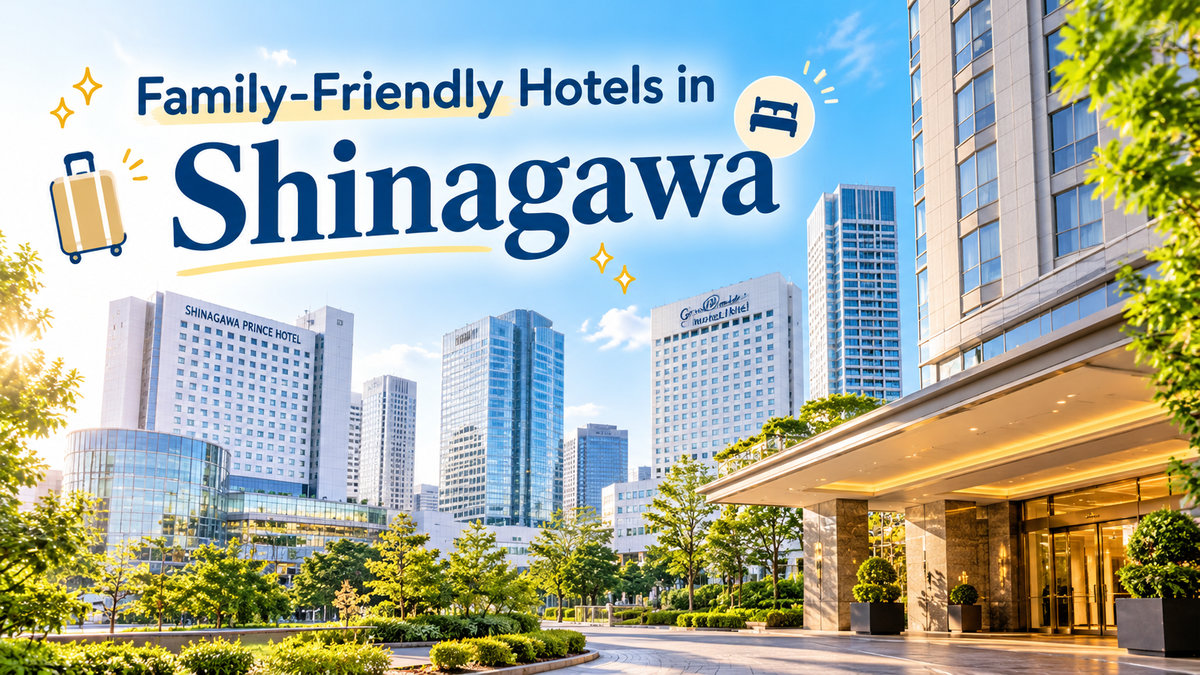
    Shinagawa is a convenient place to stay when traveling with children, especially if you’re using Haneda Airport or the Shinkansen. Maxell Aqua Park Shinagawa is also close to the station.

    You can explore the Takanawa Gateway area, too, making Shinagawa a useful base for sightseeing.

    Hotels differ in walking routes from the station and room sizes. Choose according to your children’s ages and how easy it will be to get around.

    This guide introduces five hotels with different strengths, based on official information and reviews from families who have stayed there. They aren’t ranked by score; instead, we’ve organized them to help you choose according to your travel style.


    Family-Friendly Hotel Comparison in Shinagawa

    HotelDistance from stationBest for families who
    Shinagawa Prince HotelAbout a two-minute walk from Shinagawa Station’s Takanawa ExitWant Aqua Park and a location near the station
    Grand Prince Hotel Shin TakanawaAbout a five-minute walk from Shinagawa’s Takanawa Exit; uphillWant extra space and a relaxing garden
    The Strings by InterContinental TokyoAbout a one-minute walk from Shinagawa Station’s Konan ExitLove trains or want a special hotel stay
    Miyako City Tokyo TakanawaAbout 4 minutes from Takanawa Gateway / 7 minutes from ShinagawaWant to use both Takanawa Gateway and Shinagawa stations
    Tokyo Marriott HotelAbout 5 minutes from Shinagawa Station by free shuttle busWant greenery and time to enjoy the hotel

    Note: Walking times are based on hotel information. Allow extra time to get from the station gates, navigate slopes, and move with a stroller.


    Getting Around Shinagawa Before Choosing a Hotel

    Shinagawa Station’s Takanawa Exit and Konan Exit are on opposite sides of the station. Check which exit is closer to your hotel before booking.

    Some hotels have uphill walks even if they’re only a few minutes from the station, while others use shuttle buses. Think about what moving with children and luggage will actually be like.

    If You’re Taking Trains for Sightseeing

    Shinagawa Station is a convenient starting point for airport travel, Shinkansen journeys, and sightseeing around Tokyo.

    • Haneda Airport: Direct Keikyu trains heading toward Shinagawa are convenient
    • Takanawa Gateway: One stop from Shinagawa on the Yamanote Line

    If you’re visiting Aqua Park, staying on the Takanawa Exit side makes getting around easier. From hotels on the Konan Exit side, you’ll need to cross the station’s connecting passage to the west side.

    If You’re Using Shuttle Buses or Taxis

    Tokyo Marriott Hotel in Gotenyama offers a free shuttle bus to and from Shinagawa Station. Planning around its timetable helps reduce the need to walk with luggage.

    For hotels on the hilly Takanawa side, you could consider taking a taxi on the way back when your children are tired.

    • Check the shuttle bus stop and the last departure
    • Plan around your child’s nap and meal times
    • Check how strollers and large bags can be transported
    • Choose routes with shorter outdoor walks on rainy days

    Ease of travel depends on more than the advertised number of minutes from the station. Consider your luggage and children’s ages.


    1. Shinagawa Prince Hotel: Best for Families Visiting Aqua Park

    Best for families who:

    • Want to include an aquarium visit in their itinerary
    • Want a hotel near the station for easier arrival and departure days
    • Want dining and entertainment close to their hotel

    Key features:

    • About a two-minute walk from Shinagawa Station’s Takanawa Exit
    • Maxell Aqua Park Shinagawa is on the hotel grounds
    • Several accommodation towers with a variety of room types
    • Some rooms for three guests in the Main Tower use a sofa bed

    Shinagawa Prince Hotel suits families who want to combine easy transport with activities. It’s simple to visit the aquarium, have a meal, and return to your room afterward.

    Family travel reviews praise the window views and children’s amenities, although some guests have found the rooms compact.

    Room sizes and views differ between towers. When booking, check the tower, room type, and any guarantees about the view.

    Baby cots and bed guards are subject to eligibility and availability. Because twin beds cannot be pushed together, it’s best to ask in advance if your child will share a bed.


    2. Grand Prince Hotel Shin Takanawa: Space and a Japanese Garden

    Best for families who:

    • Want to consider rooms with three separate beds
    • Want to enjoy time at the hotel as well as sightseeing
    • Want to stroll through a garden and relax

    Key features:

    • About a five-minute walk uphill from Shinagawa Station’s Takanawa Exit
    • Rooms with balconies
    • Room options such as triples for different group sizes
    • A Japanese garden shared among the Prince hotels in Takanawa

    Grand Prince Hotel Shin Takanawa is close to the station but also offers a chance to slow down and enjoy the hotel itself. If your child needs their own bed, comparing triple rooms can make your choice easier.

    Reviews from families mention the spaciousness of triple rooms, helpful staff, and enjoyable gardens and breakfasts.

    The uphill walk from Shinagawa Station is worth considering if you have a stroller or lots of luggage. Check room photos and bed-sharing policies. Never leave young children unattended on a balcony.


    3. The Strings by InterContinental Tokyo: A Special Stay for Train-Loving Kids

    Best for families who:

    • Want a room with a view of the trains
    • Want a hotel near the Shinkansen-side Konan Exit
    • Want to celebrate a special family occasion

    Key features:

    • About a one-minute walk from Shinagawa Station’s Konan Exit
    • A peaceful hotel on the upper floors of a building
    • Family accommodation packages guaranteeing train views
    • Some packages include children’s breakfast or play-related perks

    The hotel’s official family packages advertise guaranteed train views and in-room extras such as toys and tents. Free breakfast for children may be available only with eligible packages, so check exactly what your booking includes.

    Some reviews from families praise the provision of bed guards and the option to have breakfast in the room.

    Room size, extra beds, and breakfast options vary by package. Check that the benefits you want are available on your travel dates.


    4. Miyako City Tokyo Takanawa: Convenient for Shinagawa and Takanawa Gateway

    Best for families who:

    • Want to use both Takanawa Gateway and Shinagawa stations
    • Want a convenient base for sightseeing around Tokyo
    • Want somewhere to rest between activities

    Key features:

    • About a four-minute walk from Takanawa Gateway Station
    • Also about a seven-minute walk from Shinagawa Station
    • Convenient for exploring the Takanawa Gateway area
    • A guest lounge exclusively for hotel guests

    Miyako City Tokyo Takanawa’s appeal is that you can walk to both Takanawa Gateway Station and Shinagawa Station. It’s a convenient base if you want to combine Tokyo sightseeing with Shinkansen journeys.

    Reviews from guests with babies mention being able to use a baby cot and enjoying a relaxed breakfast. The hotel also has a lounge for guests.

    Some rooms are compact, so check whether there’s room for suitcases and a stroller, as well as the rules for sharing beds with children. Ask in advance whether a baby cot is available.


    5. Tokyo Marriott Hotel: Green Surroundings and Time to Relax in Gotenyama

    Best for families who:

    • Want a break from the busy area directly outside the station
    • Want to enjoy time in the room and at breakfast
    • Don’t mind using a shuttle bus to get around

    Key features:

    • A green setting in Gotenyama
    • A free shuttle bus connecting the hotel with Shinagawa Station
    • Options for generously sized guest rooms
    • Convenient for a stroll through Gotenyama Garden

    Tokyo Marriott Hotel is a good choice for families who want the hotel itself to be part of the trip. Its Gotenyama location is farther from the busy station area and offers a calmer setting.

    One family travel review describes enjoying a 38 m² room, children’s amenities, and breakfast. However, another point raised was a queue at breakfast, so allow extra time on busy days.

    The free shuttle bus from Shinagawa Station is convenient. Check its departure times and boarding location beforehand. Children’s breakfast charges and bed-sharing conditions vary by booking plan.


    Which Shinagawa Hotel Is Right for Your Family?

    If Aqua Park Is Your Main Activity

    Shinagawa Prince Hotel

    A good option if you want the aquarium, restaurants, and hotel close together. Be sure to choose the right accommodation tower and room type.

    If You Want More Beds and Time to Relax

    Grand Prince Hotel Shin Takanawa

    Triple rooms and the garden are highlights. If the uphill walk from the station is a concern, consider how you’ll travel back to the hotel.

    If Your Child Loves Trains and You Want a Special Night

    The Strings by InterContinental Tokyo

    Compare family packages that guarantee a train view. In-room playtime can be part of the experience.

    If You Want to Use Both Takanawa Gateway and Shinagawa Stations

    Miyako City Tokyo Takanawa

    A convenient location within walking distance of both stations. Check room size and the conditions for sharing beds with children.

    If You Want Green Surroundings and Larger Rooms

    Tokyo Marriott Hotel

    Use the shuttle bus and enjoy the quieter Gotenyama area. Making time for your room and breakfast helps you appreciate the hotel.


    Final Thoughts: Choose Based on Your Child’s Age and Ease of Travel

    Shinagawa hotels differ in their routes from the station, room sizes, and sleeping arrangements for children. Decide which details matter most to your family.

    When reading reviews, look for experiences from families with children of similar ages who stayed in similar room types. Impressions can vary even within one hotel, depending on the room and how busy it is.

    Before booking, check the room’s total occupancy, the full price, and any equipment you need so that both getting around and spending time at the hotel will be comfortable for your family.

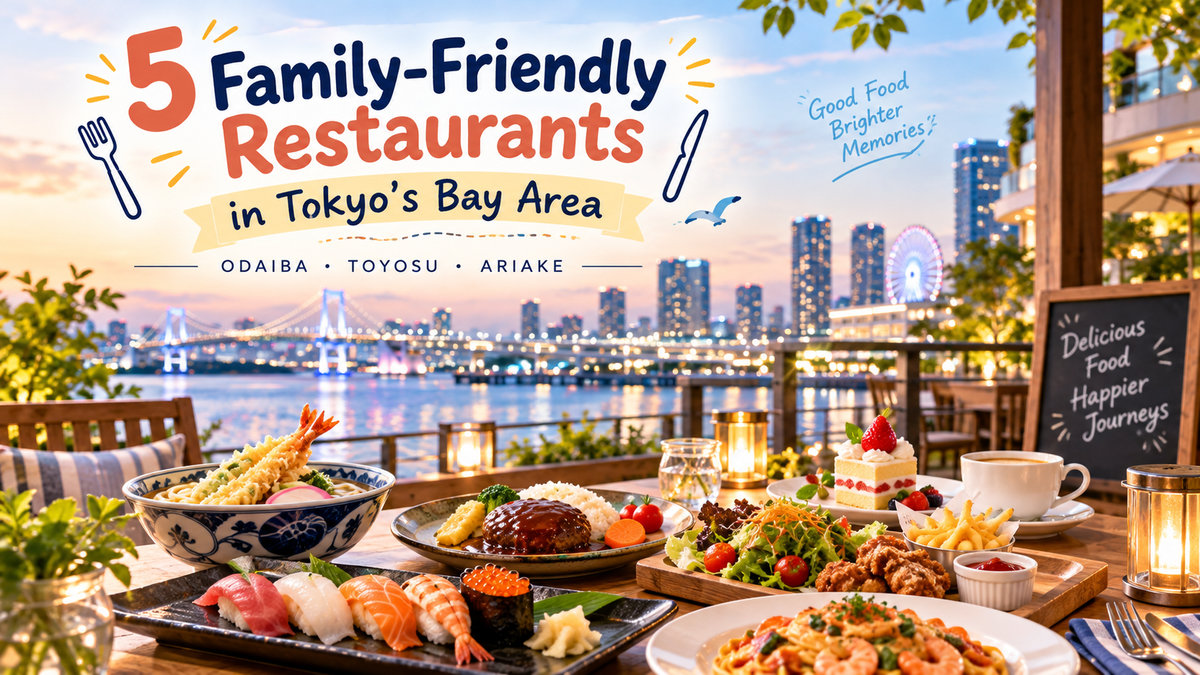
  • 5 Family-Friendly Restaurants in Tokyo’s Bay Area: Odaiba, Toyosu & Ariake

    5 Family-Friendly Restaurants in Tokyo’s Bay Area: Odaiba, Toyosu & Ariake

    Odaiba, Toyosu, and Ariake are great areas for a family day out in Tokyo. Their large shopping complexes make it easy to combine a meal with shopping, indoor play, or a walk by the water.

    Maybe you’d like to try everyday Japanese food, enjoy a special sushi lunch, or find a restaurant that’s as much fun for the children as the sightseeing.

    This guide introduces five family-friendly restaurants in Tokyo’s bay area, plus two extra options: the local food courts and Toyosu Senkyaku Banrai.


    1. 100 Spoons TOYOSU

    Best for:

    • Are traveling with babies or toddlers
    • Have children who want to eat the same food as their parents
    • Want a relaxed sit-down meal
    • Plan to visit LaLaport Toyosu

    Highlights:

    • LaLaport Toyosu 3, 1F
    • Half-size versions of adult dishes
    • Complimentary baby food for different weaning stages
    • Coloring activities and playful features inside
    • Children’s chairs available
    • Strollers welcome

    100 Spoons TOYOSU (100本のスプーン) is a great choice when you want a restaurant that welcomes the whole family. Children can enjoy half-size versions of adult dishes, and complimentary baby food is available for three weaning stages.

    Coloring activities, playful mirrors, and speaking tubes help keep children entertained while they wait. These touches are especially useful with children of different ages. Lunch can get busy, so book ahead or arrive early. Dinner tends to be quieter.


    2. Sachifukuya CAFE – Ariake Garden

    Best for:

    • Want to try a Japanese set meal
    • Want a satisfying lunch or dinner
    • Plan to spend the day at Ariake Garden

    Highlights:

    • Ariake Garden, 5F
    • Casual Japanese food
    • Set-meal style dining
    • Kids’ menu available
    • Children’s chairs available

    Sachifukuya CAFE (さち福やCAFE) is a good choice for families who want to try everyday Japanese food in a casual setting.

    A Japanese set meal, or teishoku, usually includes a main dish, rice, soup, and small side dishes. It’s an easy way to experience the kind of meal people eat in everyday life in Japan.

    With a kids’ menu and children’s chairs available, it’s also a convenient stop during a day at Ariake Garden.


    3. Wa Cafe Tsumugi – Ariake Garden

    Best for:

    • Want Japanese food in a relaxed café setting
    • Enjoy tea or dessert after a meal
    • Need a break during a visit to Ariake Garden

    Highlights:

    • Ariake Garden, 5F
    • Japanese-style meals and drinks
    • Japanese sweets
    • Kids’ menu and children’s chairs available
    • A convenient café break during a mall visit

    Wa Cafe Tsumugi (和カフェつむぎ) is a good option when you’d like Japanese food, tea, and sweets in one place.

    The kids’ menu and children’s chairs make it useful when the adults want a café break but the children still need a meal.

    Choose Sachifukuya CAFE if you’re mainly after a set meal, or Tsumugi if tea and dessert are part of the plan.

    It’s an easy choice for lunch or a relaxed afternoon break at Ariake Garden.


    4. KING OF THE PIRATES – Odaiba

    Best for:

    • Have children who love pirates and pretend adventures
    • Want a fun restaurant experience
    • Would enjoy a meal with an Odaiba view

    Highlights:

    • AQUA CiTY ODAIBA, 5F
    • Pirate-ship-themed restaurant
    • A playful setting that children can enjoy
    • Views from some seats
    • A fun choice for making a meal feel special

    KING OF THE PIRATES is a fun choice for families who want their meal to feel like part of the day’s adventure. The pirate-ship setting gives children something to get excited about before the food arrives.

    If your children love pretend adventures, the surroundings can make an ordinary lunch or dinner a memorable part of your Tokyo trip.

    If you’re lucky with your table, you may also get a lovely view of Odaiba. Not every seat has a view, so ask about seating when you book if that’s important to you.

    Come for the pirate atmosphere and a meal somewhere a little different. There isn’t a regularly scheduled live show.


    5. Sapporo Uogashi 57-ban Ikiiki Sushi – Toyosu

    Best for:

    • Want good sushi in a casual setting
    • Have children who enjoy choosing their own plates
    • Are happy to spend a little more on sushi
    • Plan to shop at LaLaport Toyosu

    Highlights:

    • LaLaport Toyosu, South Port, 3F
    • Order-based conveyor-belt sushi
    • Seafood from Hokkaido and other regions
    • Kids’ menu and children’s chairs available
    • A more premium option than budget sushi chains

    Sapporo Uogashi 57-ban Ikiiki Sushi (札幌魚河岸57番 いきいき寿司) is a great choice when you want something a little more special than a budget sushi chain, with the fun and relaxed atmosphere of conveyor-belt sushi.

    The restaurant serves sushi to order, using seafood from Sapporo’s wholesale market, Toyosu, and other parts of Japan.

    It’s a good way to enjoy delicious sushi while giving children a Japanese dining experience they can join in with.

    If your child doesn’t enjoy raw fish, options such as tamago (egg) sushi and shrimp tempura give them something else to try.


    Bonus: Food Courts When Everyone Wants Something Different

    When everyone wants something different, a food court can make mealtime much easier. Each person can order from a different counter and you can still eat together.

    You’ll find food courts at DiverCity Tokyo Plaza in Odaiba, Urban Dock LaLaport Toyosu, and Ariake Garden. They’re useful when restaurant queues are long or nobody can agree on what to eat.

    Try to avoid the busiest times: around 12 noon and 5:30 p.m., especially on weekends and holidays. Eating a little earlier or later makes it easier to find seats.

    Arrive before everyone is too hungry. If the food court is full, you can wait near a table where diners are finishing, then sit down once they’ve left.

    Bonus: Toyosu Senkyaku Banrai for a Japanese-Style Outing

    Toyosu Senkyaku Banrai is worth a visit if you’d like to enjoy a lively Japanese-style setting. You can wander through Edo-inspired streets and browse plenty of seafood restaurants and food stalls.

    Many restaurants here are on the expensive side, so check the menus outside before choosing. You can also get takeout from several places and eat at the outdoor seating.

    Children can enjoy looking around, and events sometimes include ninja shows. These aren’t held every day, so check the official event information if you’d like to see one.

    You don’t need to eat a full meal here to enjoy the visit. It also works well as a short stop to explore during a day in Toyosu.

    Tips for Eating with Kids in the Bay Area

    Choose somewhere near the part of the bay area you’re already visiting. Traveling between Odaiba, Toyosu, and Ariake just for a meal can be tiring when the children are hungry.


    Final Thoughts

    Odaiba, Toyosu, and Ariake offer a great mix of everyday Japanese meals, family-friendly cafés, and restaurants that make mealtime part of the fun.

    Here are the five restaurants featured in this guide:

    • 100 Spoons TOYOSU – For a relaxed meal with babies and young children
    • Sachifukuya CAFE – For everyday Japanese set meals at Ariake Garden
    • Wa Cafe Tsumugi – For Japanese food, tea, and sweets at Ariake Garden
    • KING OF THE PIRATES – For pirate-themed fun and a possible Odaiba view
    • Ikiiki Sushi – For a slightly more special, family-friendly sushi meal

    If choosing a restaurant starts to feel like hard work, a food court is an easy alternative. Eating before the busiest times can make a family outing much smoother.

    For a little extra exploring, add Toyosu Senkyaku Banrai to your day. You can enjoy the streets and atmosphere even if you have your main meal elsewhere.

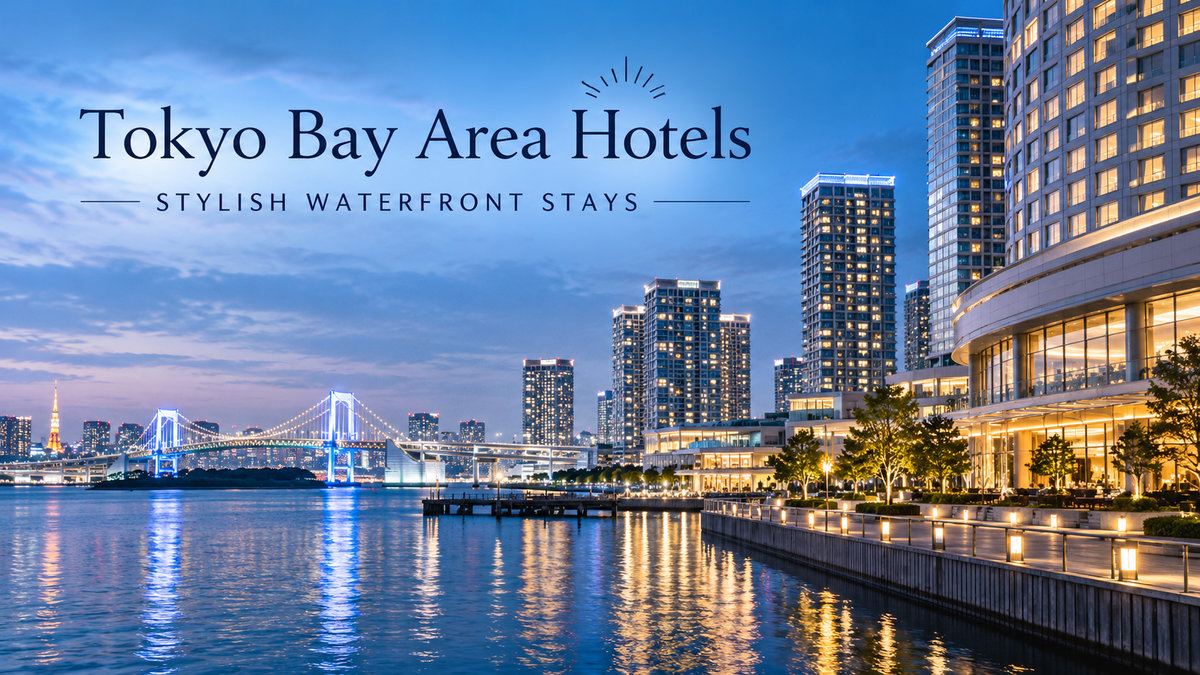
  • 5 Best Family-Friendly Hotels in Tokyo’s Bay Area: Odaiba, Toyosu & Ariake

    5 Best Family-Friendly Hotels in Tokyo’s Bay Area: Odaiba, Toyosu & Ariake

    Looking for a Tokyo hotel where the whole family can slow down after sightseeing? Odaiba, Toyosu, and Ariake are worth a closer look.

    Tokyo’s bay area combines waterfront walks, large shopping complexes, and hotels with a wider choice of room layouts. It can work particularly well when your plans include Odaiba, teamLab Planets, or a day at Tokyo Disney Resort.

    The best location depends on your itinerary. Odaiba has plenty of indoor play spaces for children. Toyosu offers convenient subway access and attractions such as KidZania and teamLab Planets. Ariake has a family-friendly shopping complex as well as museums such as the Tokyo Water Science Museum and SMALL WORLDS.

    Not sure whether Odaiba, Toyosu, or Ariake is the best fit? Start with our family guide to Tokyo’s Bay Area.

    This guide introduces five recommended hotels for a family stay.


    Recommended Tokyo Bay Area Hotels Comparison

    HotelStation AccessA Good Fit For
    Grand Nikko Tokyo DaibaDirectly connected to DaibaRelaxed Odaiba stays
    Hilton Tokyo OdaibaDirectly connected to DaibaOdaiba sightseeing and hotel comfort
    Villa Fontaine Grand Tokyo AriakeAriake: about 4 min walkBabies and younger children
    Sotetsu Grand Fresa Tokyo-Bay AriakeKokusai-tenjijo / Tokyo Big Sight: about 3 min walkTokyo sightseeing and a Disney day
    Mitsui Garden Hotel Toyosu PremierDirectly connected to Toyosu subway stationEasy transport, shopping, and meals

    Airport buses have limited departures. Check the current timetable and reservation details before matching a bus to your flight.

    If you’re traveling with young children, I definitely recommend a private airport transfer over the limousine bus.

    It takes you directly from Haneda or Narita Airport to your hotel, so you don’t have to worry about bus schedules, transfers, or carrying luggage while keeping an eye on your children.

    You can book a private airport transfer in advance through Klook.


    Planning a Day at Tokyo Disney Resort?

    From Toyosu

    Toyosu
    → Shin-Kiba (Tokyo Metro Yurakucho Line)
    → Maihama (JR Keiyo Line)

    From Odaiba / Ariake

    Odaiba / Ariake
    → Shin-Kiba (Rinkai Line)
    → Maihama (JR Keiyo Line)

    Depending on your hotel, you may also need a short walk or an additional connection to reach the nearest station.

    Hilton Tokyo Odaiba and Sotetsu Grand Fresa Tokyo-Bay Ariake also offer complimentary Good Neighbor Hotel shuttles to Tokyo Disney Resort. Advance reservations are required and seats are limited, so check early if you plan to use them.


    1. Grand Nikko Tokyo Daiba

    Highlights:

    • Directly connected to Daiba Station on the Yurikamome line
    • Odaiba’s shopping malls and waterfront close by
    • Limousine buses from both Haneda and Narita

    Grand Nikko Tokyo Daiba is a good choice for families who want to relax at the hotel as well as explore Odaiba. With shops and restaurants nearby, it is easy to take breaks at your children’s pace.

    Many rooms are spacious, giving families room to relax during their stay. Having shopping and dining nearby is also very convenient. Some rooms offer lovely views, so a room with a view is worth considering if you have the option.


    2. Hilton Tokyo Odaiba

    Highlights:

    • Directly connected to Daiba Station on the Yurikamome line
    • Convenient for Odaiba outings and nearby shopping
    • Limousine buses from both Haneda and Narita

    Hilton Tokyo Odaiba is a good choice for families who want to enjoy both Odaiba outings and time at the hotel. Its direct station connection is convenient when traveling with a stroller or suitcases.

    The hotel’s shuttle to Tokyo Disney Resort makes it convenient if a Disney visit is on your itinerary. Many reviews mention the friendly, helpful staff, which can be reassuring on a first trip to Japan. Grand Nikko is very close by, so it is worth comparing the two based on your preferred room and the rates for your travel dates.


    3. Villa Fontaine Grand Tokyo Ariake

    Highlights:

    • A particularly appealing option for babies and younger children
    • Certified Welcome Baby accommodation, with designated room options
    • Shopping and meals within the Ariake Garden complex

    Villa Fontaine Grand Tokyo Ariake is a hotel to put on your shortlist when traveling with little ones. It has Welcome Baby certification and offers rooms designed with babies in mind. Not every room has the same baby-friendly setup, so check the designated room types when booking.

    Some rooms have a tatami area where children who move around in their sleep can sleep at floor level, without the worry of rolling off a bed. The direct connection to the shopping complex makes meals and shopping convenient even on rainy or hot days. It is also easy to return to the hotel for a nap and a short rest.


    4. Sotetsu Grand Fresa Tokyo-Bay Ariake

    Highlights:

    • About 3 minutes’ walk from Kokusai-tenjijo and Tokyo Big Sight stations
    • Limousine buses from both Haneda and Narita
    • A reserved, complimentary shuttle for a Disney day

    Sotetsu Grand Fresa Tokyo-Bay Ariake is worth considering for a trip that combines Tokyo sightseeing and Tokyo Disney Resort. Two nearby stations and airport bus stops at the hotel make it a practical base.

    Guest reviews include praise for the rooms’ cleanliness and space, as well as the convenience of the Disney shuttle. Room sizes and facilities vary, so choose a room that suits your family.


    5. Mitsui Garden Hotel Toyosu Premier

    Highlights:

    • Directly connected to Toyosu Station on the Yurakucho subway line
    • LaLaport close by for shopping and family meals
    • Convenient airport buses to Toyosu Station

    Mitsui Garden Hotel Toyosu Premier is worth considering for families who prioritize convenient transport. It is directly connected to Toyosu subway station, with LaLaport close by. The location makes it easy to head out sightseeing or stay nearby for meals and shopping.

    Rooms here tend to be smaller overall than those at the Ariake and Odaiba hotels featured in this guide. Some reviewers also say they would have liked a larger bed, so it is worth looking through the room photos when choosing your room.


    Final Thoughts

    For an Odaiba stay, compare Grand Nikko and Hilton. For younger children, take a look at Villa Fontaine; for a Disney day, Sotetsu is another useful option. Mitsui Garden is appealing if you value Toyosu’s transport links and nearby shopping.

    Looking for easy places to eat nearby? See our guide to family-friendly restaurants in Odaiba, Toyosu, and Ariake.

    Before booking, check these three things:

    • The number of beds and the rules for children’s stays and bed-sharing
    • The total price for your family, including breakfast
    • Airport bus stops, departure times, and reservations

    Use this guide as a starting point to find a hotel that suits your children’s ages and the places your family wants to visit.

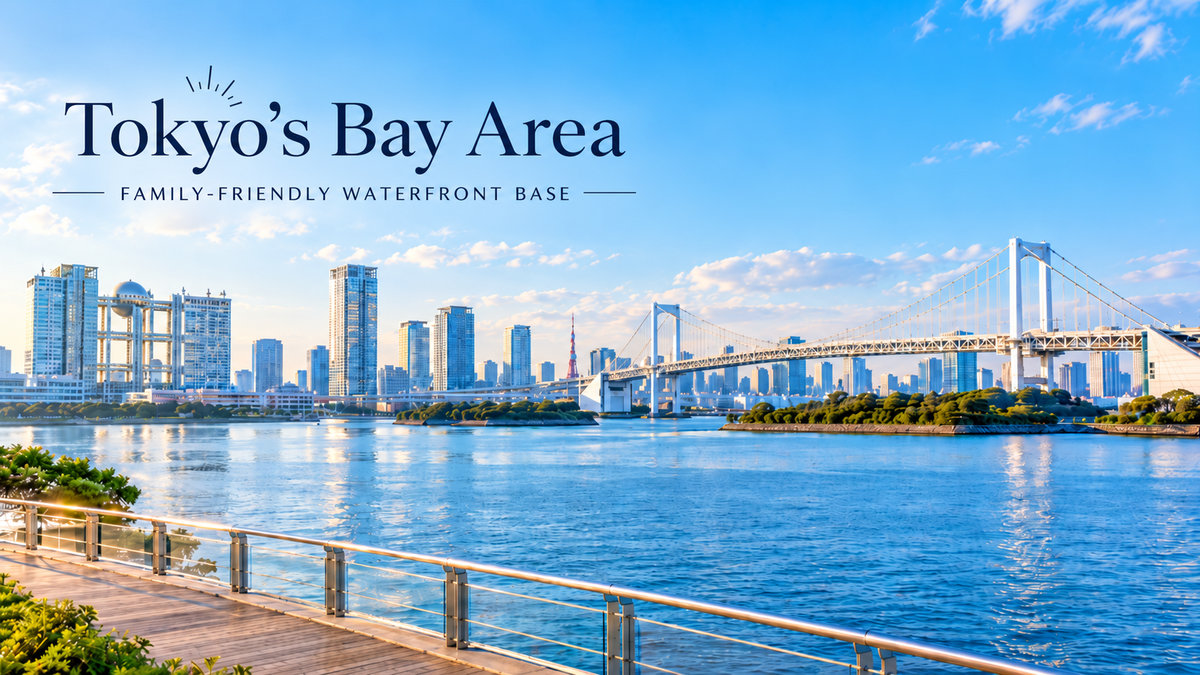
  • Why Tokyo’s Bay Area Is a Great Place to Stay for Families: Odaiba, Toyosu & Ariake

    Why Tokyo’s Bay Area Is a Great Place to Stay for Families: Odaiba, Toyosu & Ariake

    When planning a family trip to Tokyo, it is natural to look for hotels in Shinjuku, Shibuya, or near Tokyo Station.

    But with children, a good location also means having somewhere nearby to eat, play, buy supplies, and take a break.

    Tokyo’s waterfront offers another way to plan your stay: combine city sightseeing with shopping malls, indoor attractions, and time beside the bay.

    The bay area is especially appealing if your family wants:

    • Child-friendly activities close to your hotel
    • Shopping and meal options in large malls
    • A quieter place to stay after busy sightseeing days
    • A Tokyo stay that can also include a Disney day

    Still comparing where to stay? See our guide to the best family-friendly areas to stay in Tokyo.


    What Is Tokyo’s Bay Area Like?

    In this guide, “Tokyo’s bay area” means Odaiba, Toyosu, and Ariake on Tokyo’s waterfront—not the whole coastline around Tokyo Bay.

    Expect modern buildings, shopping complexes, parks, and wide views of the water. This is a different setting from the narrow shopping streets and historic neighborhoods you may picture when imagining Tokyo.

    The important point is that these are three separate areas, not one compact neighborhood where everything is beside the same station.

    Use these differences when choosing your base:

    • Odaiba: UNKO MUSEUM, LEGOLAND Discovery Center Tokyo, and large shopping complexes
    • Toyosu: LaLaport Toyosu, KidZania Tokyo, and Tokyo Metro access
    • Ariake: Ariake Garden, the Tokyo Water Science Museum, and SMALL WORLDS
    • Yurikamome: links the waterfront districts with Shimbashi and Toyosu
    • Rinkai Line: useful for Odaiba and Ariake, with connections beyond the bay

    Check the hotel’s nearest station and the actual route to the places you plan to visit. A “Tokyo Bay” hotel name alone does not tell you how convenient it will be.

    Toyosu Station and the Toyosu Market area are separate locations. The market is a two-minute Yurikamome ride from Toyosu Station.


    1. Easy Access to Tokyo Disney Resort

    A bay-area stay can work well if Tokyo Disney Resort is one part of a wider Tokyo itinerary.

    The usual rail routes involve changing at Shin-kiba:

    Odaiba / Ariake → Rinkai Line to Shin-kiba → JR Keiyo Line to Maihama (about 30–40 minutes)

    Toyosu → Tokyo Metro Yurakucho Line to Shin-kiba → JR Keiyo Line to Maihama (about 15–20 minutes)

    Maihama is the gateway to the resort; allow extra time to reach your chosen park. For several Disney days or frequent hotel breaks, staying closer to the resort may be more practical.


    2. Convenient for Tokyo Sightseeing

    The best transport option depends on which part of the bay you choose and where you want to go.

    The main connections to keep in mind are:

    • Toyosu: the Tokyo Metro Yurakucho Line takes you to the Ginza and Yurakucho area in about 10 minutes.
    • Odaiba and Ariake: the Rinkai Line takes you toward Shibuya and Shinjuku in about 20 minutes.
      (Note that not all trains run directly to Shibuya or Shinjuku, so check the destination.)

    Stations worth checking when comparing hotel locations include:

    • Odaiba: Tokyo Teleport, Daiba, and Odaiba-kaihinkoen stations
    • Ariake: Kokusai-tenjijo, Ariake, and Ariake-tennis-no-mori stations
    • Toyosu: Toyosu and Shin-toyosu stations

    The elevated Yurikamome ride can itself be fun for children. However, if most of your itinerary is around Ueno or Asakusa, I would not recommend staying here because of the travel time.


    3. Family-Friendly Hotels with Convenient Nearby Facilities

    The bay area has hotels worth comparing for room layouts, nearby facilities, and waterfront settings.

    When comparing hotels and room types, useful starting points include:

    Many bay-area hotels have rooms with beautiful night views. Large shopping complexes near the hotels also make dinner and shopping convenient.

    For more options, compare our recommended family-friendly hotels in Odaiba, Toyosu, and Ariake.


    4. Family-Friendly Attractions Across the Bay Area

    Staying here makes it easier to build a day around one main activity, with a meal and a break nearby.

    Odaiba: Waterfront Walks and Indoor Discovery

    Odaiba combines waterfront scenery with shopping and indoor sightseeing.

    Possible stops include:

    • Odaiba Marine Park for a walk beside the bay
    • DECKS Tokyo Beach or Aqua City Odaiba for food and shopping
    • Miraikan, the National Museum of Emerging Science and Innovation
    • Indoor attractions for children, including UNKO MUSEUM, LEGOLAND Discovery Center Tokyo, and Round One

    Odaiba has so many places to play and explore that a single day is not enough to enjoy them all.


    Toyosu: KidZania and teamLab Planets

    LaLaport Toyosu is a large shopping complex directly connected to Toyosu Station. Inside, KidZania Tokyo offers job role-play activities for children aged 3–15. English programs are also available, making it an option even if your children do not speak Japanese.

    teamLab Planets is near Shin-toyosu Station. Children can enjoy it too, so it is worth considering during a stay in Toyosu.

    Same-day tickets may not be available for either KidZania or teamLab Planets, so booking ahead is a good idea.


    Ariake: Indoor Play at Ariake Garden

    BorneLund KID-O-KID at Ariake Garden is an indoor play space that families can enjoy with babies and toddlers, including little ones aged around 0–2.

    It is useful when children need active play rather than another sightseeing stop.

    A simple Ariake Garden day can combine:

    • A session at KID-O-KID
    • Lunch in the mall’s food court or restaurants
    • Shopping for snacks or everyday supplies

    There are also museums children can enjoy, such as SMALL WORLDS and the Tokyo Water Science Museum.

    Traveling with a baby or toddler? See our guide to the best indoor play areas in Tokyo for ages 0–2.


    5. A Comfortable Area for Families

    One of the bay area’s biggest advantages is how easily a shopping stop can also become a meal break or a change of plan.

    That helps when:

    • Your child needs a snack sooner than expected
    • You need replacement clothes or daily supplies
    • Everyone wants a different kind of meal
    • Rain or summer heat makes outdoor sightseeing difficult

    LaLaport Toyosu, Ariake Garden, and DiverCity Tokyo Plaza bring shops and dining together. They also have food courts, saving you the trouble of walking around looking for a restaurant that can accommodate a stroller.

    Looking for easy places to eat with kids? See our guide to family-friendly restaurants in Odaiba, Toyosu, and Ariake.

    These large shopping complexes also have well-equipped nursing rooms and diaper-changing facilities, making shopping and meals easier with young children.

    The streets are also wider than in Shibuya or Shinjuku, making it easier to get around with a stroller.


    How to Get to Tokyo’s Bay Area

    From Narita Airport

    By Train

    Narita Airport → Narita Express to Tokyo Station → JR Yamanote Line to Shimbashi → Yurikamome to Daiba, Ariake, or Toyosu
    (About 2 hours)

    By Airport Limousine Bus

    Managing a stroller and large suitcases on stairs, or searching for elevators during train transfers, can be hard work. Tokyo Station and Shimbashi Station have many stairs in particular. For families traveling with children, the limousine bus is by far the easier option.

    • Take a bus serving the Shiba, Shiodome, Takeshiba, Odaiba, and Ariake area to a stop near your hotel.
    • Many airport-departure limousine bus services only sell tickets on the day of travel, so check whether you can book yours in advance.

    From Haneda Airport

    By Train

    Odaiba and Ariake

    Haneda Airport → Tokyo Monorail to Tennozu Isle → Rinkai Line to Tokyo Teleport or Kokusai-tenjijo Station

    Toyosu

    Haneda Airport → Tokyo Monorail to Tennozu Isle → Rinkai Line to Shin-kiba → Tokyo Metro Yurakucho Line to Toyosu

    • There is some distance between the Tokyo Monorail and Rinkai Line stations at Tennozu Isle, so you will need to walk between them.

    By Airport Bus or Taxi

    • Limousine bus: some services stop right outside hotels, so check the routes when choosing where to stay.
    • Taxi: around 30 minutes, costing approximately ¥7,000–¥10,000.

    Haneda Airport is close to the bay area, making it an especially convenient base if you are flying into Haneda.


    My Top Recommendation for Families: Private Airport Transfer

    If you’re traveling with children, I definitely recommend booking a private airport transfer rather than taking the limousine bus.

    You’ll be picked up at the airport and taken directly to your hotel, so there’s no need to worry about bus schedules, transfers, or carrying luggage while keeping an eye on your children.

    From Haneda Airport → Tokyo Bay Area hotels: about 20–30 minutes by car

    From Narita Airport → Tokyo Bay Area hotels: about 60–90 minutes by car


    Who Should Stay in Tokyo’s Bay Area?

    Odaiba, Toyosu, and Ariake are especially worth considering for families who:

    ✓ Want waterfront attractions to be part of the trip
    ✓ Prefer meals and shopping close to planned activities
    ✓ Need indoor options for rainy or very hot days
    ✓ Are happy to use trains between neighborhoods
    ✓ Plan a mix of Tokyo sightseeing and a Disney day


    Summary: Tokyo’s Bay Area Is a Comfortable Base for Family Trips

    The bay area is a strong option when you want your hotel surroundings to be part of the holiday, with places to play, eat, and slow down.

    For families, the biggest advantages are:

    • Family-friendly attractions across Odaiba, Toyosu, and Ariake.
    • Shopping, restaurants, and everyday essentials close to many hotels.
    • Indoor options for rainy days and hot summer weather.
    • Convenient access to central Tokyo and Tokyo Disney Resort, depending on the area.
    • Wide streets and a more relaxed waterfront atmosphere.

    If most of your itinerary is in Ueno, Asakusa, or other parts of central Tokyo, compare travel times carefully before booking. The bay area works best when you plan to enjoy the waterfront itself.

    For families who want to combine Tokyo sightseeing with indoor play, shopping, and practical meal stops, Odaiba, Toyosu, and Ariake are worth considering.

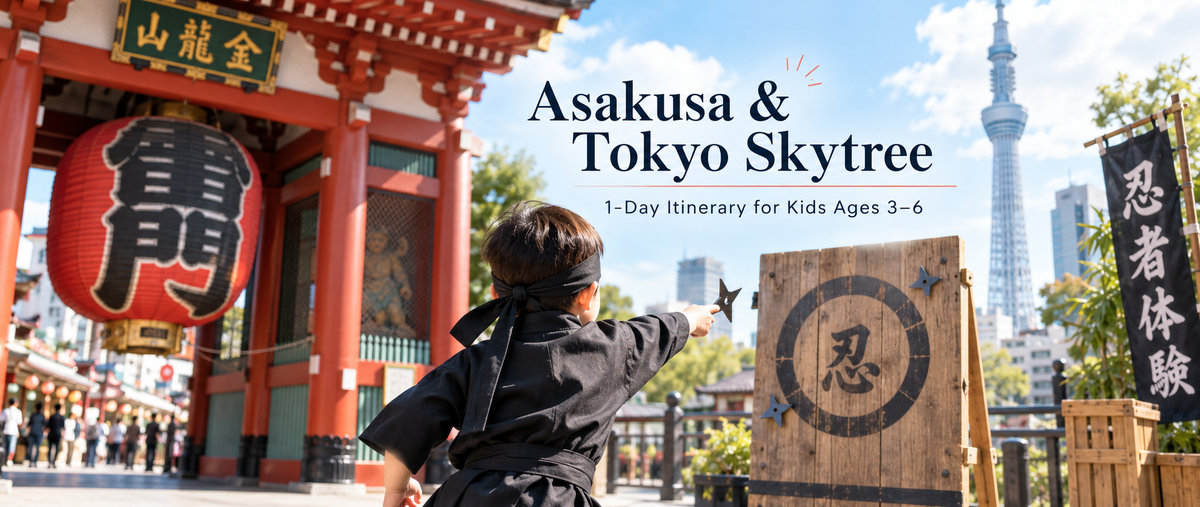
  • Tokyo with Kids Ages 3–6: A Detailed 1-Day Asakusa & Tokyo Skytree Itinerary

    Tokyo with Kids Ages 3–6: A Detailed 1-Day Asakusa & Tokyo Skytree Itinerary

    Tokyo can be a lot of fun with preschoolers, but the best family days usually are not the ones packed with the most attractions.

    For children ages 3 to 6, it helps to mix different kinds of activities throughout the day: sightseeing, hands-on experiences, food, rides, breaks, and time to simply sit down.

    Asakusa is one of the best areas in Tokyo for this.

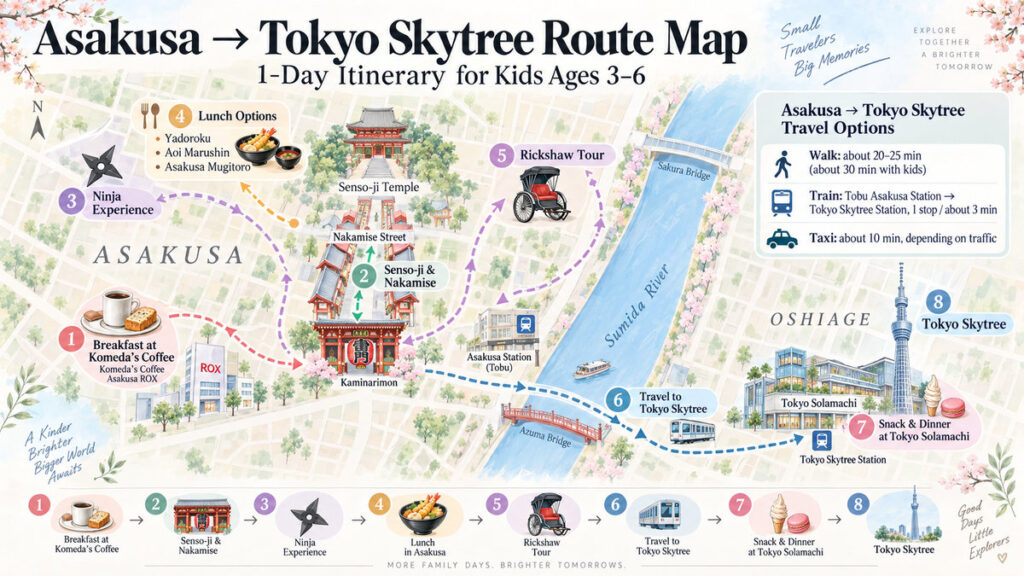
    You can enjoy traditional Tokyo scenery around Senso-ji Temple and Nakamise Street, while also adding activities that children can actively enjoy, such as a ninja experience and a rickshaw ride.

    This itinerary is designed for families with children ages 3 to 6 and covers a full day from Asakusa to Tokyo Skytree.

    It includes realistic travel time, meal options, snack breaks, and a few backup choices in case your child gets tired.

    Highlights of This Itinerary

    • Start the day slowly with breakfast in Asakusa
    • Explore Senso-ji Temple and Nakamise Street
    • Try a hands-on ninja experience
    • Choose from three family-friendly lunch options
    • Rest your legs during a 90-minute rickshaw tour
    • Travel to Tokyo Skytree without rushing
    • Take a snack break before heading to the observation deck
    • Choose between a special dinner or an easy food court meal
    • Book several key experiences in advance through Klook

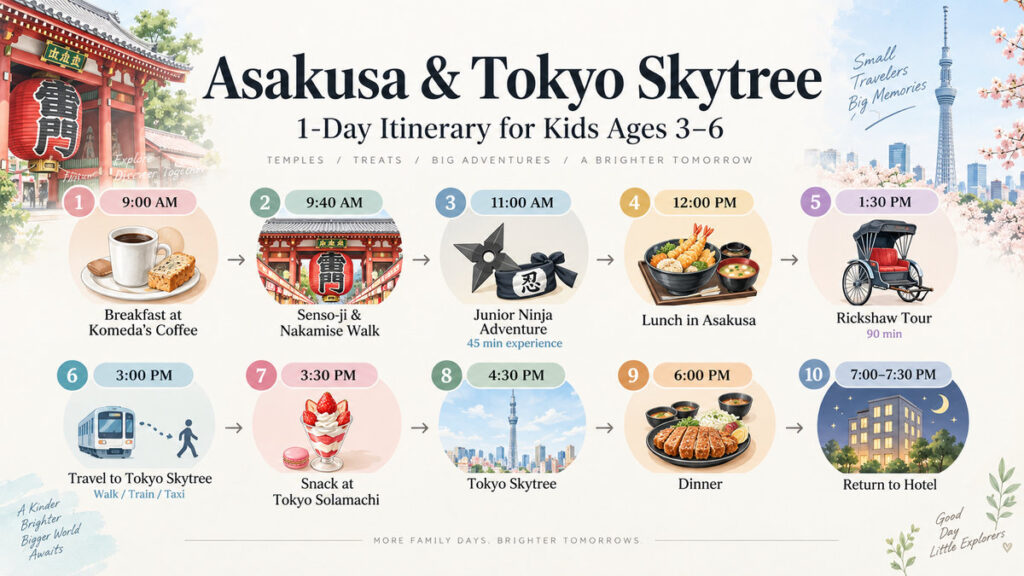
    One-Day Schedule

    TimePlan
    9:00 AMBreakfast at Komeda’s Coffee Asakusa ROX
    Around 9:40 AMWalk around Senso-ji Temple and Nakamise
    11:00 AMJunior Ninja Adventure Experience
    12:00 PMLunch
    1:30 PM90-minute rickshaw tour
    3:00 PMTravel to Tokyo Skytree
    3:30 PMSnack break at Tokyo Solamachi
    4:30 PMTokyo Skytree observation deck
    Around 5:30 PMExplore Tokyo Solamachi
    6:00 PMDinner
    Around 7:00–7:30 PMReturn to your hotel

    9:00 AM – Breakfast at Komeda’s Coffee Asakusa ROX

    Start the day at Komeda’s Coffee inside Asakusa ROX.

    When traveling with young children, starting with a proper sit-down breakfast can make the rest of the day much easier.

    Asakusa ROX has restrooms, diaper-changing facilities, and free Wi-Fi, making it a convenient place to get organized before sightseeing.

    This is a good time to:

    • Check your reservations for the day
    • Take children to the restroom
    • Organize bags and strollers
    • Make sure everyone has drinks and anything they need

    There is no need to rush straight into sightseeing.

    A calm start often makes a big difference when traveling with preschoolers.

    Around 9:40 AM – Explore Senso-ji Temple and Nakamise Street

    After breakfast, head toward Senso-ji Temple.

    The classic route starts at Kaminarimon Gate, continues through Nakamise shopping street, and ends at the temple.

    With children ages 3 to 6, I recommend keeping this part of the day to around one hour.

    There are plenty of shops and snacks along Nakamise, but because lunch is coming soon, it is probably better not to stop for too much food.

    You can walk around:

    • Kaminarimon Gate
    • Nakamise Street
    • Senso-ji Temple
    • The five-story pagoda
    • The area around Asakusa Shrine

    Because the ninja experience starts at 11:00 AM, try to finish sightseeing around 10:40 or 10:45 and start heading to the meeting point.

    11:00 AM – Junior Ninja Adventure Experience

    One of the best ways to make Asakusa more fun for young children is to add a ninja experience.

    After spending the morning looking at temples and traditional streets, children can finally do something active themselves.

    The experience takes about 45 minutes and includes child-friendly ninja activities such as throwing shuriken and learning simple ninja techniques.

    Book in Advance with Klook

    The Junior Ninja Adventure Experience can be booked through Klook.

    For this itinerary, an 11:00 AM reservation works especially well because it fits neatly between morning sightseeing and lunch.

    The timing looks like this:

    11:00–11:45 AM – Ninja experience
    ↓
    12:00 PM – Lunch

    Booking ahead also makes the rest of the day much easier to plan.

    12:00 PM – Lunch in Asakusa

    Asakusa has plenty of great Japanese food, but when you are traveling with a 3- to 6-year-old, the food itself is only part of the decision.

    It is also worth thinking about:

    • How spacious the restaurant is
    • Whether there are floor-seating options
    • Whether a stroller is easy to manage
    • Whether an English menu is available
    • How long the meal is likely to take

    Here are three different options depending on what your family wants.

    Option 1: Onigiri Asakusa Yadoroku

    Best for families who want a simple and very Japanese food experience.

    Asakusa Yadoroku is known as Tokyo’s oldest onigiri specialty shop.

    You can enjoy freshly prepared rice balls made right in front of you, which makes it a fun and easy Japanese food experience.

    An English menu is available.

    Good to know

    The restaurant is very small, so it is not ideal for strollers.

    Payment is cash only.

    Because the shop can become busy, this option is best for families who have some flexibility before the 1:30 PM rickshaw reservation.

    If there is a long wait, another lunch option may work better for this particular itinerary.

    Option 2: Aoi Marushin

    Best for families who prioritize comfort and space.

    Aoi Marushin is a long-established tempura restaurant in Asakusa.

    It has a large number of seats, including traditional tatami-style seating, which can make it easier to visit with children.

    An English menu is also available.

    This is a good option if you want to try tempura or tendon in a restaurant that feels less cramped than some of Asakusa’s smaller traditional restaurants.

    Option 3: Asakusa Mugitoro

    Best for families who want a more relaxed Japanese meal.

    Asakusa Mugitoro specializes in Japanese dishes featuring grated yam and other traditional ingredients.

    The restaurant is spacious and has an English menu.

    It offers a different type of Japanese food experience from tempura or onigiri.

    For this itinerary, however, it is best to choose a quicker meal rather than a long multi-course option, since the rickshaw tour starts at 1:30 PM.

    1:30 PM – 90-Minute Rickshaw Tour

    After lunch, it is time for a rickshaw tour of Asakusa.

    This is especially well placed in the afternoon because children have already spent much of the morning walking.

    A 90-minute rickshaw ride gives everyone a chance to sit down while still continuing to sightsee.

    Depending on the tour, you may see areas such as:

    • Traditional Asakusa streets
    • The Sumida River area
    • Views of Tokyo Skytree
    • Historic neighborhoods around Asakusa

    For children, simply riding in a rickshaw can be one of the most memorable parts of the day.

    Rickshaw Tours Are Also Available on Klook

    Rickshaw tours in Asakusa can also be booked through Klook.

    If you want to follow this itinerary closely, booking a 1:30 PM slot in advance is a good idea.

    That way, your three main reservations can all fit into a clear schedule:

    • 11:00 AM – Ninja experience
    • 1:30 PM – Rickshaw tour
    • 4:30 PM – Tokyo Skytree

    Traveling with Young Children

    Rickshaw seating rules for young children can vary depending on age and how many people are riding.

    If your child is around age 6, it is especially important to check the seating rules when booking, as this may affect how many rickshaws your family needs.

    3:00 PM – Travel from Asakusa to Tokyo Skytree

    After the rickshaw tour, head to Tokyo Skytree.

    There are three practical ways to get there.

    Option 1: Walk

    For adults, the walk takes around 20 to 25 minutes.

    With young children, I would allow closer to 30 minutes.

    If the weather is good and your child still has energy, walking can be a nice way to enjoy the riverside scenery and see Tokyo Skytree getting closer as you go.

    Best for

    • Children who are still energetic
    • Good weather
    • Families using a stroller
    • Travelers who enjoy walking and city views

    Option 2: Train

    Take the Tobu Line from Asakusa Station to Tokyo Skytree Station.

    It is only one stop, and the ride itself takes just a few minutes.

    This is the easiest choice if you want to save your child’s energy.

    Option 3: Taxi

    A taxi is the most comfortable option.

    Depending on traffic, the ride usually takes around 10 minutes.

    If your child looks tired or sleepy after the rickshaw tour, taking a taxi can be worth it.

    You do not have to use trains for every short journey in Tokyo.

    A quick taxi ride can sometimes make the whole day much easier with young children.

    3:30 PM – Snack Break at Tokyo Solamachi

    Once you arrive at Tokyo Skytree, do not rush straight to the observation deck.

    Take a short break first.

    By this point, everyone has been out since the morning, so a snack and restroom break can help reset the day before the final sightseeing activity.

    Tokyo Solamachi has several easy options around the food court area.

    Option 1: Banana Biyori

    A good choice for families who want something sweet.

    Banana-based desserts are easy for many children to enjoy, and the chocolate banana is a fun option.

    Option 2: Okhotsk Okoppe Milk Stand

    A good choice if your child loves soft serve.

    The milk-based desserts are popular, and the strawberry soft serve is especially nice for an afternoon treat.

    Option 3: Tsukiji Gindaco

    If your family wants something savory instead of sweet, try Gindaco.

    It is one of Japan’s best-known takoyaki chains and a convenient way to try takoyaki without committing to a full meal.

    4:30 PM – Go Up Tokyo Skytree

    After your snack break, head up Tokyo Skytree.

    Depending on the season, a late-afternoon visit may let you see the city in daylight and then watch the view change toward sunset.

    Booking Ahead Is Recommended

    Tokyo Skytree tickets can also be purchased through Klook.

    With young children, avoiding long ticket lines can make the experience much easier, so booking a timed entry in advance is a good idea.

    The 350-Meter Deck May Be Enough

    Tokyo Skytree also has a higher observation area, but with children ages 3 to 6, the main 350-meter observation deck may already be more than enough.

    If your child is still excited and energetic, you can continue higher.

    If everyone is getting tired, there is no need to force it.

    For a preschooler, 350 meters is already very, very high.

    Around 5:30 PM – Explore Tokyo Solamachi

    After coming down from Tokyo Skytree, spend a little time looking around Tokyo Solamachi.

    There are plenty of shops, but by this point in the day, your child may be getting tired.

    There is no need to walk through every floor just because you are already there.

    If your child is ready for dinner, skip the shopping and head straight to the restaurant.

    6:00 PM – Dinner

    For dinner, it helps to have both a special option and an easy backup plan.

    Option 1: Matenro

    Best for families who want a special dinner with a view.

    Matenro is a restaurant where you can enjoy both dinner and impressive views around Tokyo Skytree.

    Foreign-language menus are available, and the restaurant offers family-friendly features such as children’s meals and high chairs.

    Strollers are also welcome.

    Reservations are available, so booking ahead is recommended if this is an important part of your day.

    Option 2: Brasserie Aux Amis

    Best if your family wants a break from Japanese food.

    After several days in Japan, some families are simply ready for something different.

    Brasserie Aux Amis serves French food and also offers impressive views.

    Children’s menus and high chairs are available, and foreign-language menus are offered.

    Reservations are possible, so booking in advance is a good idea.

    Option 3: The Food Court

    Best when your child is completely done for the day.

    After a full day of sightseeing, 6:00 PM can be the point when a preschooler has simply had enough.

    In that situation, do not force a long restaurant dinner.

    The food court is an excellent backup.

    You can find easy options such as:

    • Udon
    • Ramen
    • Chicken dishes
    • Takoyaki

    There is also a Tomica shop nearby.

    If your child is getting bored while waiting for food, looking at toy cars or buying a small Tomica car to play with can be a useful distraction.

    When traveling with young children, finishing the day happily is more important than sticking to the original restaurant plan.

    Around 7:00–7:30 PM – Return to Your Hotel

    After dinner, head back to your hotel.

    If you have been out since 9:00 AM with a 3- to 6-year-old, this is already a very full day.

    Once you return, keep the evening simple:

    • Bath
    • Get ready for the next day
    • A little quiet play
    • Bedtime

    It can be tempting to keep sightseeing because you are in Tokyo, but returning to the hotel at a reasonable time usually makes the next day much more enjoyable.

    Why This Itinerary Works Well for Kids Ages 3–6

    The biggest advantage of this itinerary is that it does not repeat the same type of activity all day.

    The rhythm looks like this:

    See
    Senso-ji and Nakamise

    ↓

    Do
    Ninja experience

    ↓

    Eat
    Lunch in Asakusa

    ↓

    Sit and sightseeing at the same time
    Rickshaw tour

    ↓

    Travel

    ↓

    Rest and snack

    ↓

    See something exciting
    Tokyo Skytree

    That change of pace is important for preschoolers.

    Young children often get bored when they spend hours simply following adults around famous sightseeing spots.

    Adding hands-on activities, food, rides, and breaks makes it much easier for them to stay engaged.

    What Should You Book in Advance?

    If you want to follow this itinerary closely, I recommend booking these three activities before your trip:

    • 11:00 AM – Junior Ninja Adventure Experience
    • 1:30 PM – 90-minute Asakusa rickshaw tour
    • 4:30 PM – Tokyo Skytree

    All three can be booked through Klook, which makes it easy to organize the key parts of the day before you arrive in Tokyo.

    Final Thoughts: Make Asakusa Fun for the Kids Too

    Asakusa is fascinating for adults, but temples and traditional streets alone may not hold a preschooler’s attention for an entire day.

    That is why this itinerary adds experiences that children can enjoy for themselves.

    Become a ninja.
    Ride in a rickshaw.
    Have a snack.
    Look down at Tokyo from one of its tallest landmarks.

    And if you do not follow the entire itinerary exactly, that is completely fine.

    If your child is tired, take a taxi instead of walking.

    If dinner at a restaurant feels too difficult, use the food court.

    If everyone has had enough, skip shopping at Tokyo Solamachi.

    Traveling with young children is easier when the itinerary has room to change.

    You do not need to visit the maximum number of attractions to have a successful day.

    If everyone can return to the hotel thinking, “That was fun,” it was a good day in Tokyo.

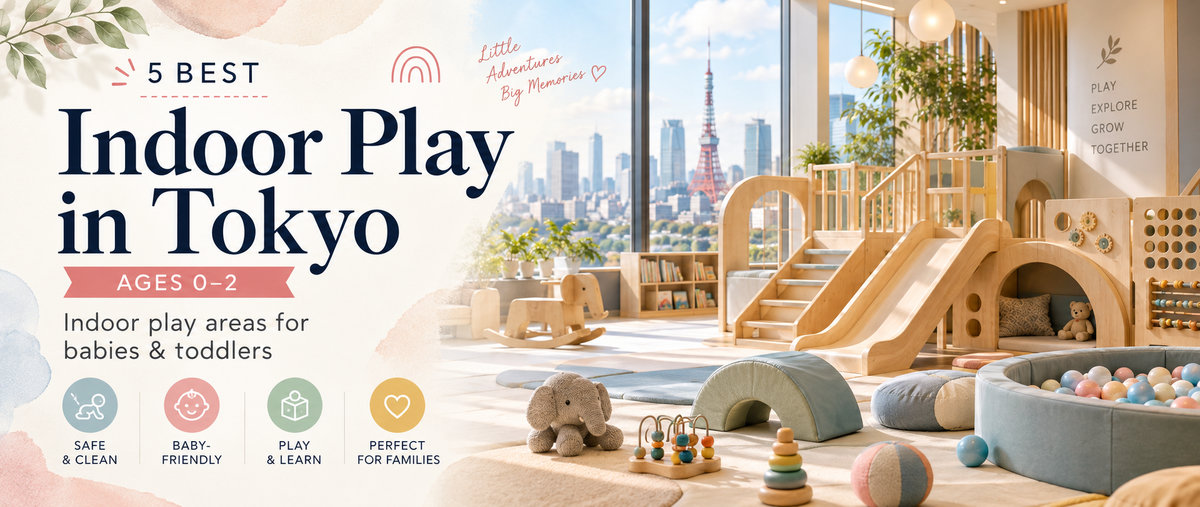
  • 5 Best Indoor Play Areas in Tokyo for Babies and Toddlers (Ages 0–2)

    5 Best Indoor Play Areas in Tokyo for Babies and Toddlers (Ages 0–2)

    Tokyo has plenty of exciting attractions for families.

    But traveling around Tokyo with a baby or toddler can be harder than you might expect.

    Taking a stroller onto a crowded train can be stressful, and many of Tokyo’s famous attractions are much more interesting for adults or older children than they are for babies who still want to crawl, walk around, touch things, and play.

    And when you are traveling, you do not have to spend every day visiting famous sightseeing spots.

    For babies and toddlers, having time to crawl, walk, explore toys, and move their bodies freely can be just as important as sightseeing.

    Indoor play areas are especially useful on rainy days or during Japan’s very hot and humid summers.

    In this guide, I’ll introduce five indoor play areas in Tokyo that are especially good for babies and toddlers aged 0 to 2, from the perspective of a parent raising a young child in Japan.

    I chose these places based on whether they offer:

    • Play areas suitable for babies and young toddlers
    • Spaces where crawling and newly walking children can play safely
    • Nursing rooms and diaper-changing facilities
    • Indoor activities for rainy or extremely hot days
    • Locations that are relatively easy to include in a Tokyo itinerary

    1. Tokyo Toy Museum – A Beautiful Wooden Play Space for Babies

    Area: Yotsuya, Shinjuku

    Tokyo Toy Museum is an interactive museum where children can touch, explore, and play with a wide variety of toys, especially wooden toys.

    One of the best areas for families with very young children is the Baby Wooden Playroom.

    This space is exclusively for children aged 0, 1, and 2 and their parents or guardians.

    Babies can sit, crawl, and explore wooden toys in a peaceful space surrounded by natural wood.

    Because older children are not allowed inside this particular area, parents do not have to worry as much about babies being bumped into by bigger kids running around.

    The museum also has nursing and diaper-changing facilities, and there is a designated stroller parking area near the entrance.

    Best for

    Tokyo Toy Museum is especially good for babies who are just beginning to explore toys or children who prefer calm sensory play over large climbing equipment.

    The beautiful wooden environment also feels distinctly Japanese, so it can be an interesting experience for parents as well as children.

    Good to know

    The Baby Wooden Playroom currently operates on a one-hour rotation system.

    Children aged 3 and older, including older siblings, cannot enter this particular room for safety reasons.

    Check the official website before visiting for the latest opening times and entry rules.


    2. Shumi no Mori Higashi-Shinjuku – Play, Eat, and Take a Break in One Place

    Area: Higashi-Shinjuku

    When traveling with a baby or toddler, there are times when your child wants to play but you, as a parent, just want to sit down for a while.

    That is where Shumi no Mori can be especially useful.

    This indoor family facility welcomes children from birth and includes play areas with ball pits, ride-on toys, and other activities.

    There is also an indoor sensory sand area called Mori no Sunaba, designed for children aged 0 to 24 months.

    It uses kinetic sand, allowing even very young children to enjoy sensory play indoors.

    Another major advantage is that Shumi no Mori is not just a playground.

    There are flat, shoe-free seating areas where families can eat and relax, as well as drinks and snacks.

    Babies under one year old can enter for free, and some admission plans include unlimited soft drinks and snacks.

    Best for

    This is a good choice for families staying around Shinjuku or those who want to take a longer break in the middle of a busy sightseeing day.

    Rather than being somewhere you visit only to entertain your child, it is a place where the whole family can slow down and recharge.

    Looking for another easy place to take a break with kids? Japanese karaoke can also work surprisingly well as a private family rest stop.

    It is also within walking distance of Higashi-Shinjuku Station, making it relatively easy to combine with sightseeing in the Shinjuku area.


    3. BørneLund Kid-O-Kid Ariake Garden – Great for Active Toddlers

    Area: Ariake / Odaiba

    Once children start walking, some toddlers are no longer satisfied with sitting and playing with toys.

    They want to climb, run, move, and explore.

    For active toddlers, BørneLund Kid-O-Kid at Ariake Garden is a great option.

    Kid-O-Kid is an indoor play center designed around different stages of child development.

    For younger babies, there is a dedicated Baby Garden with equipment designed to encourage crawling, standing, and early walking.

    The Ariake Garden location also offers activities for babies, and special admission rates are available for younger infants.

    By around age 2, children can also enjoy more of the larger play areas and physical activities throughout the facility.

    Nursing rooms, diaper-changing areas, and stroller parking are also available.

    Best for

    This is especially good for active 1- and 2-year-olds who love walking, climbing, and moving their bodies.

    Because it is located inside Ariake Garden, families can easily have lunch, go shopping, or take a break after playtime.

    It works particularly well as part of a sightseeing day around Ariake or Odaiba.


    4. Chikyu no Niwa Tokyo Solamachi – Let Your Child Play During a Tokyo Skytree Day

    Area: Oshiage / Tokyo Skytree

    Tokyo Skytree is one of Tokyo’s most popular sightseeing attractions.

    But for a baby or toddler, simply looking at the view from a tall building may not be the most exciting part of the day.

    That is why Chikyu no Niwa inside Tokyo Solamachi can be such a useful addition to your itinerary.

    The Tokyo Solamachi location has a dedicated Baby Garden for children aged 0 to 2.

    Young children can climb small hills, play in a ball pit, enjoy pretend play with a wooden kitchen, and explore activities designed for their age and development.

    The baby area is separated from the main Kids Garden for older children, which makes it easier for very young children to play at their own pace.

    Best for

    This is one of my favorite choices for families who want to enjoy famous Tokyo sightseeing without making the entire day about what the adults want to do.

    For example, you could visit Tokyo Skytree in the morning, have lunch at Tokyo Solamachi, and then give your baby or toddler some time to play in the afternoon.

    Tokyo Solamachi also has many restaurants and shops, making it a convenient place to spend several hours indoors on a rainy or very hot day.

    Traveling with an older preschooler too? See our detailed Asakusa & Tokyo Skytree 1-day itinerary for kids ages 3–6.


    5. ASOBono! – A Large Indoor Playground with a Dedicated Baby Area

    Area: Suidobashi / Tokyo Dome City

    ASOBono!, located inside Tokyo Dome City, is one of the larger indoor play facilities in central Tokyo.

    For younger children, there is a dedicated area called the Haihai Garden, designed for babies and toddlers aged 0 to 24 months.

    The area includes baby-friendly ball pits, soft blocks, bars for pulling up to stand, and interactive toys that make sounds.

    It is designed for children at different early developmental stages, from babies who are still crawling to toddlers who are beginning to walk.

    There is also a baby room next to the Haihai Garden with nursing and diaper-changing facilities.

    Once children become too old for the baby area, there are many other zones throughout ASOBono! where toddlers can enjoy pretend play and more active physical activities.

    Best for

    ASOBono! is particularly good for days when you want to take a break from sightseeing and simply give your child plenty of time to play.

    Because it is located inside Tokyo Dome City, there are restaurants and other facilities nearby, so it can easily become the main destination for a slower family day.

    The facility can become crowded, particularly on weekends and public holidays, and admission may sometimes be limited.

    It is a good idea to check the official website before visiting.


    Which Indoor Play Area Should You Choose?

    Each of these places has a slightly different strength.

    For quiet play with a baby
    → Tokyo Toy Museum

    For parents who want to eat, rest, and let their child play in one place
    → Shumi no Mori

    For active 1- and 2-year-olds who want to move their bodies
    → BørneLund Kid-O-Kid Ariake Garden

    For combining playtime with Tokyo Skytree sightseeing
    → Chikyu no Niwa Tokyo Solamachi

    For a large indoor playground with a dedicated baby area
    → ASOBono!

    The best choice will depend on where you are staying and what else you plan to do that day.

    Final Thoughts: Give Your Baby Time to Play During Your Tokyo Trip

    When traveling to Tokyo with a young child, it is tempting to fill your itinerary with as many famous attractions as possible.

    But what is fun for adults is not always fun for a baby or toddler.

    After spending hours sitting in a stroller, riding trains, and following adults around sightseeing spots, young children can understandably become tired or restless.

    Adding some time when they can crawl, walk, touch toys, and simply play freely can make the trip much more enjoyable for them.

    And when your child is happily playing, it can also give you a chance to slow down and relax.

    Indoor play areas are especially helpful on rainy days, during Japan’s hot summers, or simply on days when everyone needs a break from sightseeing.

    If you’re staying near Tokyo Disney Resort, AEON MALL Makuhari New City is another useful rainy-day option with indoor play, restaurants, shopping, and family facilities.

    Even if you end the day thinking, “We didn’t do much sightseeing today,” that does not mean it was a wasted day.

    If your child spent the day smiling and having fun, that can become one of the best memories of your family trip to Japan.

  • Shabu-Shabu Guide: Try Japan’s Fun “Cook Your Own” Hot Pot Experience with Your Family

    Shabu-Shabu Guide: Try Japan’s Fun “Cook Your Own” Hot Pot Experience with Your Family

    What Is Shabu-Shabu?

    Shabu-shabu is a Japanese hot pot dish where you cook thin slices of meat by gently moving them through a pot of hot soup for a few seconds.

    The name “shabu-shabu” comes from the sound of moving the meat through the hot broth.

    The most common ingredients are:

    • Beef
    • Pork
    • Vegetables
    • Mushrooms
    • Tofu
    • Chicken meatballs
    • Udon noodles

    Unlike many restaurant meals, shabu-shabu is a meal where you cook your own food at the table.

    This makes it a fun experience, especially for children who enjoy watching their food being prepared right in front of them.


    Different Types of Shabu-Shabu Restaurants in Japan

    There are many different styles of shabu-shabu restaurants in Japan.

    Generally, they can be divided into two categories:

    1. All-you-can-eat shabu-shabu restaurants

    These are the easiest option for families and first-time visitors.

    Shabu-Yo

    Shabu-Yo is one of the most popular family-friendly shabu-shabu chains in Japan.

    Why it is recommended:

    • Affordable prices
    • Tablet ordering (easy even for visitors)
    • Large vegetable bar
    • All-you-can-eat meat and vegetables
    • Casual atmosphere

    It is a great choice if you want to try shabu-shabu without worrying about the menu.

    On-Yasai

    On-Yasai is another popular all-you-can-eat shabu-shabu chain.

    Compared with Shabu-Yo:

    • The atmosphere is a little more relaxed
    • Staff usually bring ingredients to your table instead of having you pick everything up yourself
    • Prices are slightly higher

    It is a good choice for families who want a more comfortable dining experience.


    2. Course-style shabu-shabu restaurants

    If you want higher-quality meat and a more traditional Japanese dining experience, course-style restaurants are a great option.

    However, some traditional restaurants may not be ideal for young children, so checking in advance is recommended.

    Kisoji

    Kisoji is a well-known shabu-shabu restaurant that offers course meals.

    It is recommended because:

    • Families are welcome
    • Some locations have private rooms
    • The atmosphere is more traditional
    • Good-quality meat is available

    Ume-no-Hana

    Ume-no-Hana is not a shabu-shabu specialty restaurant, but it offers shabu-shabu along with traditional tofu-based Japanese cuisine.

    It is also known as a family-friendly restaurant with a calm atmosphere.


    Shabu-Shabu Is a Great First Japanese Food Experience

    For travelers trying Japanese food for the first time, shabu-shabu is one of the easiest choices.

    Why?

    • The flavor is mild and not too strong
    • You can choose what ingredients you like
    • Children can enjoy cooking their own food
    • Everyone can eat at their own pace

    For children, watching meat and vegetables cook right in front of them can feel like a fun activity rather than just a meal.


    Tips for Enjoying Shabu-Shabu

    Use separate chopsticks for raw meat

    When adding raw meat to the hot pot, use the provided cooking chopsticks or dedicated utensils.

    Do not use your personal eating chopsticks for raw meat.


    Add rice or noodles at the end

    After finishing the meat and vegetables, many Japanese people enjoy adding:

    • Rice
    • Udon noodles

    to the remaining soup.

    The broth becomes full of flavor and makes a delicious final dish.


    Make reservations for popular restaurants

    For restaurants such as Kisoji or Ume-no-Hana, reservations are recommended, especially:

    • Weekends
    • Holidays
    • Dinner time

    Some restaurants may be fully booked if you visit without a reservation.


    Be careful with children around the hot pot

    The pot and cooking equipment are placed on the table, so young children should be supervised.

    For families with toddlers, restaurants with larger tables or private rooms can make the experience more comfortable.


    Final Thoughts

    Shabu-shabu is more than just a meal — it is a fun Japanese dining experience.

    Cooking your own food at the table, choosing your favorite ingredients, and sharing a hot pot together makes it a memorable activity for the whole family.

    If you are looking for a Japanese meal that both adults and children can enjoy, shabu-shabu is definitely worth adding to your Tokyo travel itinerary.

    If you’re staying near Tokyo Disney Resort, we also recommend Shabu-Yo in our family-friendly restaurant guide to Kasai and Nishi-Kasai.

  • Japanese Karaoke for Families: A Perfect Rest Spot During Your Japan Trip

    Japanese Karaoke for Families: A Perfect Rest Spot During Your Japan Trip

    When traveling in Japan with children, there are moments when parents simply want to sit down, relax, and take a break.

    After walking around Tokyo all day, visiting theme parks, or exploring with a stroller, finding a comfortable place where children can relax can be challenging.

    That is when Japanese karaoke becomes a surprisingly useful option.

    Many international visitors imagine karaoke as a place where people sing on a stage or in a bar. However, Japanese karaoke is very different.

    Most karaoke places in Japan are made up of private rooms, where families can enjoy food, drinks, and time together in their own space.

    In fact, many Japanese families use karaoke not only for singing but also as a comfortable place to rest with children.

    This guide explains why Japanese karaoke is a great option for families traveling with kids and how to enjoy this unique Japanese experience.


    Japanese Karaoke Is a Private Family Room

    In many countries, karaoke is often associated with public performances or bars.

    In Japan, however, karaoke usually means renting a private room for your group.

    This makes it very family-friendly.

    Benefits include:

    • Children can make noise without worrying about other guests
    • Families can eat comfortably inside the room
    • Many locations allow strollers inside the room
    • Air-conditioned rooms provide a comfortable break from the weather

    Traveling with children can be tiring, especially when walking around all day.

    A private karaoke room gives parents a chance to sit down and relax while children enjoy themselves.


    You Don’t Have to Sing

    One surprising thing for many visitors is that you do not have to sing at Japanese karaoke.

    Using karaoke rooms without singing is actually quite common.

    People use karaoke rooms for:

    • Lunch or dinner
    • A child’s nap time
    • Taking shelter from rain
    • Resting between sightseeing activities
    • Spending private family time

    Restaurants and cafés can sometimes be difficult with young children, especially if they need to move around or take a break.

    A karaoke room gives families their own private space, making it much less stressful.


    Many Karaoke Shops Have Family-Friendly Facilities

    Some Japanese karaoke chains offer facilities designed especially for families with children.

    Depending on the location, you may find:

    • Kids’ rooms
    • Flat-floor rooms where you can remove your shoes
    • Children’s plates and utensils
    • Baby food allowed
    • Drink bars
    • Toys and cushions

    One of the most family-friendly karaoke chains is Pasela Resorts.

    Some locations have rooms that feel almost like a small indoor playroom, with spaces where children can play while parents relax.


    How Much Does Karaoke Cost in Japan?

    Japanese karaoke usually charges by:

    • 30-minute time periods
    • Free-time packages (unlimited use for several hours)

    Prices are usually calculated per person.

    Each karaoke chain has different rules, such as:

    • One drink purchase required
    • Drink bar included
    • Unlimited soft drinks

    Prices are often much cheaper during weekday daytime hours, making karaoke a convenient and affordable rest spot during a family trip.


    Recommended Karaoke Chains in Japan

    Pasela Resorts

    Best for:

    • Want child-friendly facilities
    • Want to enjoy food as well as karaoke
    • Prefer a comfortable space for children

    Highlights:

    • Family rooms available at some locations
    • Known for good food
    • Excellent family-friendly services

    Maneki Neko

    Best for:

    • Want an affordable option
    • Need a location that is easy to find

    Highlights:

    • Many locations throughout Japan
    • Budget-friendly prices
    • Many drink options

    Karaoke Kan

    Best for:

    • Want to visit during Tokyo sightseeing
    • Need a convenient location

    Highlights:

    • Many stores near stations and tourist areas
    • Easy for first-time visitors
    • Convenient during sightseeing

    Big Echo

    Best for:

    • Want a well-known nationwide chain
    • Prefer stores with possible English support

    Highlights:

    • Locations throughout Japan
    • Some stores offer foreign language support
    • Various room types available

    Why Karaoke Is Great for Family Travel in Japan

    Traveling with children often comes with unexpected challenges:

    • Walking long distances with a stroller
    • Needing breaks from Japan’s hot summers or cold winters
    • Sudden rain changing your plans
    • Children becoming tired or upset

    Japanese karaoke solves many of these problems because you can:

    • Sit down and rest
    • Order food and drinks
    • Stay in a comfortable air-conditioned room
    • Let children relax in a private space

    Especially during Japan’s hot and humid summer, karaoke can be a great place to escape the heat during the afternoon.

    aJapan Summer Travel with Kids: What Every Family Should Know Before Visiting


    Final Thoughts

    Japanese karaoke is not just a place to sing.

    It is a private family space where you can eat, relax, and enjoy time together.

    For families visiting Tokyo, it can be a convenient option on:

    • Hot summer days
    • Rainy days
    • Long sightseeing days
    • Moments when children need a break

    Many karaoke shops are located near train stations in cities, making them easy to visit during your trip.

    If you are visiting Japan with children, consider trying karaoke—not only as entertainment, but also as a unique and practical part of Japanese family culture.

    If rain changes your plans near Tokyo Disney Resort, you can also check our guide to indoor things to do near Tokyo Disneyland on a rainy day.