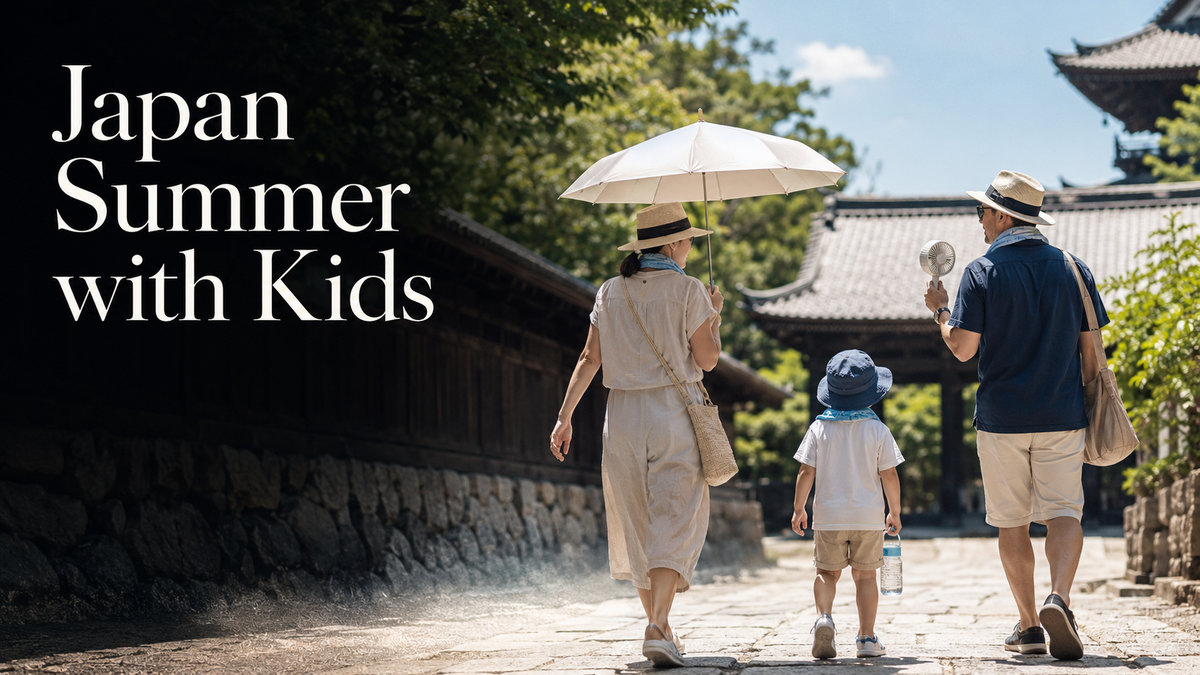
Summer in Japan is full of exciting experiences, from colorful festivals to spectacular fireworks displays. However, one thing surprises many international visitors—the heat.
You might think, “30°C (86°F) doesn’t sound too bad,” but Japan’s summer is extremely hot and humid, making it feel much hotter than the temperature suggests. Young children are especially vulnerable to heat exhaustion and heatstroke, so preparing for the weather is essential.
As a parent raising a child in Japan, I rarely take my child to the park during the middle of a summer day because it’s simply too hot.
In this guide, I’ll share what families should know before traveling to Japan during the summer, including how local families stay safe, what to pack, and the best ways to enjoy your trip.
Japan’s Summer Is Hotter Than You Might Expect
Summer in Japan (July through September) is known for its high temperatures and high humidity.
In Tokyo, it’s common to experience:
- Temperatures above 35°C (95°F)
- Humidity levels of 70–90%
- Tropical nights when temperatures stay close to 30°C (86°F) even after sunset
Because the humidity is so high, sweat doesn’t evaporate easily, making the heat feel much more intense than in dry climates.
Many visitors are surprised by how quickly they start sweating, even after walking for just a few minutes.
If you’re traveling with young children, keep in mind that they are closer to the ground, where temperatures are even hotter because of heat radiating from the pavement.
How Do Japanese Children Spend the Summer?
In many countries, summer vacation means spending the entire day outdoors.
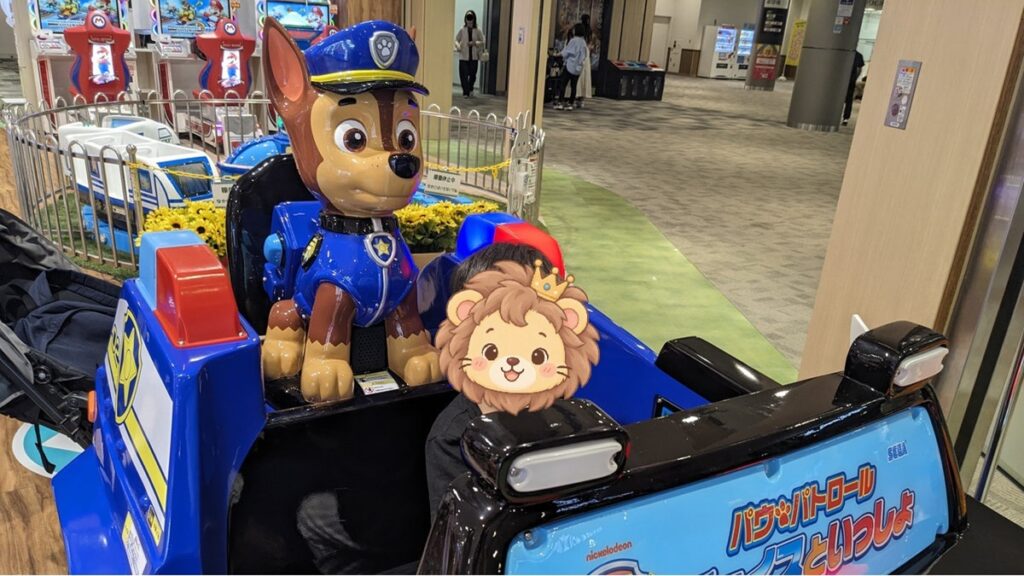
In Japan, however, most families avoid outdoor activities during the hottest part of the day.
Instead, many spend time in air-conditioned places such as:
- Shopping malls
- Indoor playgrounds
- Science museums
- Aquariums
- Libraries
Even preschools and daycare centers sometimes cancel outdoor play or swimming lessons when the WBGT (Wet Bulb Globe Temperature) reaches unsafe levels.
Another thing many visitors don’t expect is how hot playground equipment becomes. Metal slides, rubber flooring, and asphalt can become hot enough to cause burns. Children should avoid touching these surfaces with bare hands or sitting on them during the afternoon.
Rather than planning outdoor sightseeing all day, it’s much more comfortable to spend the hottest hours indoors.
The Best Daily Schedule for Summer Travel
Planning your day around the heat can make a huge difference.
Morning (7:00–10:00 AM)
This is the coolest part of the day—although it can still be quite hot.
If you’d like to visit places such as:
- Parks
- Shrines and temples
- Asakusa
- Outdoor sightseeing areas
try to do so early in the morning.
Midday (10:00 AM–4:00 PM)
This is usually the hottest part of the day.
It’s a good time to enjoy indoor attractions like:
- Shopping malls
- Aquariums
- Museums
- Indoor theme parks
Having lunch or shopping during these hours helps you avoid the strongest heat.
Evening
Even after sunset, Tokyo can remain very warm.
Evenings are perfect for:
- Dinner
- City views
- Walking around illuminated areas
However, don’t expect it to feel cool just because it’s nighttime. Many summer evenings remain hot and humid.
Enjoy Japan’s Unique Summer Events
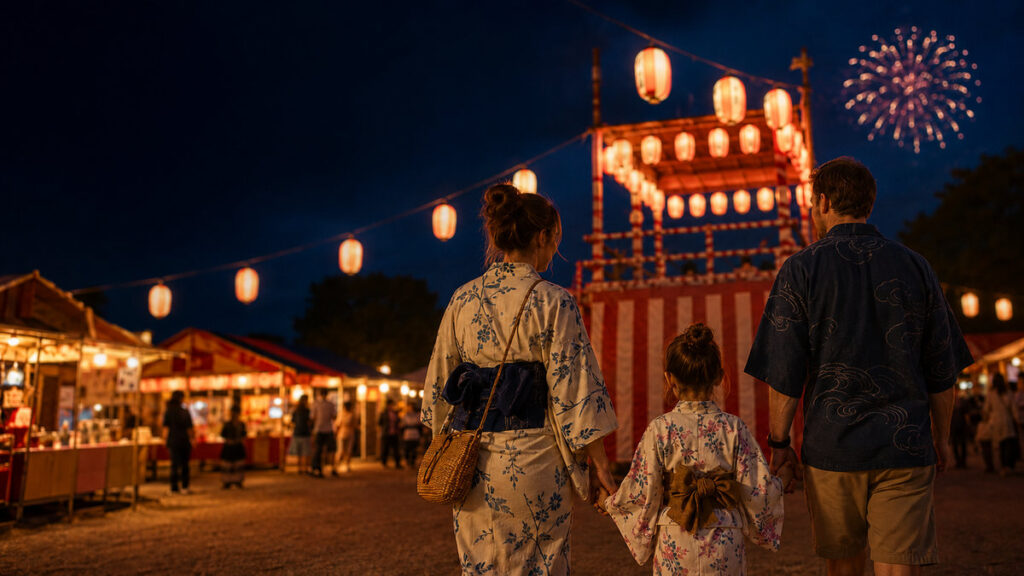
Despite the heat, summer is one of the most exciting seasons to visit Japan.
Fireworks Festivals (Hanabi)
Large fireworks festivals are held all across Japan during the summer.
Watching Japanese fireworks is an unforgettable experience, but popular events can become extremely crowded.
If you’re traveling with small children, consider watching from a little farther away. You’ll still enjoy the fireworks while avoiding the largest crowds.
Summer Festivals (Matsuri)
Summer festivals are one of the best ways to experience Japanese culture.
You’ll find food stalls selling favorites such as:
- Takoyaki (octopus balls)
- Yakisoba (fried noodles)
- Kakigori (shaved ice)
- Goldfish scooping
- Water balloon games
Many festivals welcome international visitors, making them a fun cultural experience for the whole family.
One important tip: many food stalls only accept cash, so be sure to carry some Japanese yen if you plan to visit a festival.
Bon Odori Dance Festivals
Many neighborhoods also hold Bon Odori, traditional community dance festivals.
Anyone is welcome to join, making it a wonderful opportunity to experience local Japanese culture alongside residents.
Best Indoor Attractions for Families
During Japan’s hottest months, combining sightseeing with indoor attractions is much more enjoyable than spending all day outside.
Some of the best family-friendly indoor destinations around Tokyo include:
- AEON MALL Makuhari New City
- Kandu (children’s career experience theme park)
- teamLab Planets
- LEGOLAND Discovery Center Tokyo
- Tokyo Skytree
- KidZania Tokyo
- Sunshine Aquarium
- Sumida Aquarium
- Tokyo Sea Life Park
- National Museum of Emerging Science and Innovation (Miraikan)
Shopping malls are especially convenient because they also offer:
- Nursing rooms
- Baby changing facilities
- Food courts
- Children’s play areas
making them excellent places to cool down during the day.
If your family simply needs a quiet place to sit, eat, and cool down, Japanese karaoke can also be a surprisingly useful rest stop with kids.
Strollers Can Get Surprisingly Hot
A stroller is convenient, but it requires extra care during a Japanese summer.
Because children sit much closer to the pavement, they are exposed to much higher temperatures than adults.
Heat builds up because of:
- Heat reflected from asphalt
- Poor airflow inside the stroller
- Hot air trapped around the seat
Take frequent breaks and avoid leaving children in the stroller for long periods in direct sunlight.
Many Japanese parents now use stroller cooling fans or cooling seat liners during summer.
Some parents also place ice packs underneath the stroller seat or in the storage basket to help keep the stroller cooler.
Baby Carriers Can Feel Even Hotter
Baby carriers can become even warmer because the parent’s and baby’s bodies are in constant contact.
Both babies and parents often sweat heavily.
If possible:
- Alternate between a stroller and a baby carrier
- Take breaks indoors
- Avoid carrying your baby for long periods outdoors
Many parents also place a small cooling pack behind the baby’s back inside the carrier to help reduce heat buildup.
Summer Packing List for Japan
Here are some essentials to bring for a summer family trip.
Heat Protection
- Hat
- Sunscreen
- Sunglasses
- Portable handheld fan
- Cooling towel
- Reusable water bottle
- Frozen drinks (available at many convenience stores)
For Children
- 2–3 extra sets of clothes
- Diapers
- Baby wipes
- Plastic bags
- Small towels
Rain Gear
Summer is also rainy in Japan.
It’s helpful to bring:
- Foldable umbrella
- Raincoat
- Waterproof bag
For more detailed clothing advice, see our month-by-month guide to what to wear in Tokyo.
Don’t Worry If You Forget Something
One of the great things about traveling in Japan is how easy it is to buy anything you need.
You’ll find plenty of:
- Convenience stores
- Drugstores
- UNIQLO
- GU
- 100-yen shops
If you run out of children’s clothes, sunscreen, cooling products, drinks, or other daily necessities, you can easily buy them during your trip.
There’s no need to overpack—many essentials are readily available throughout Japan.
Final Thoughts
Japan’s summer is beautiful, exciting, and full of unforgettable experiences—but it is also much hotter and more humid than many visitors expect.
If you’re traveling with children, planning your day around the weather makes a huge difference. Spend the hottest hours indoors, stay hydrated, and take plenty of breaks.
At the same time, don’t miss the chance to experience uniquely Japanese summer traditions such as fireworks festivals, matsuri, and Bon Odori.
With the right preparation, your family can enjoy a fun, safe, and memorable summer vacation in Japan.
Leave a Reply