Tag: Japan Travel Tips

  • Shabu-Shabu Guide: Try Japan’s Fun “Cook Your Own” Hot Pot Experience with Your Family

    Shabu-Shabu Guide: Try Japan’s Fun “Cook Your Own” Hot Pot Experience with Your Family

    What Is Shabu-Shabu?
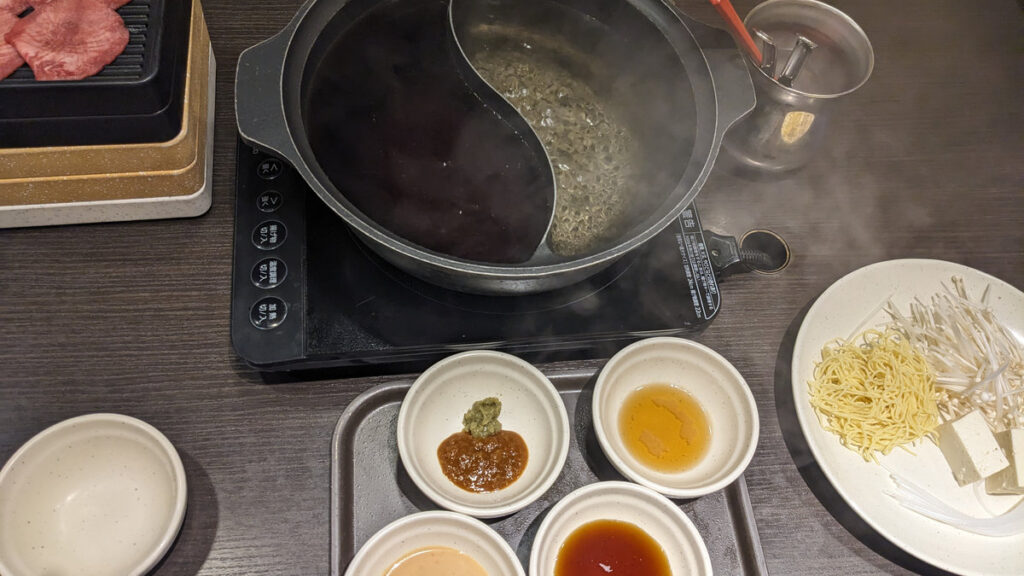
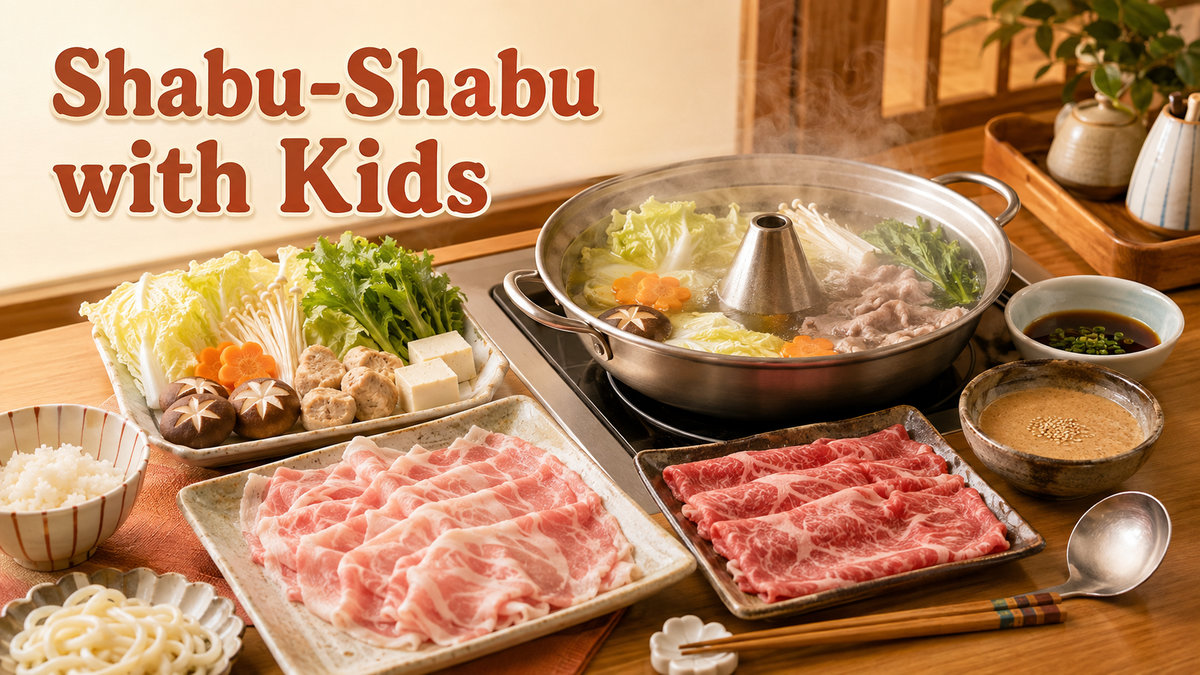
    Shabu-shabu is a Japanese hot pot dish where you cook thin slices of meat by gently moving them through a pot of hot soup for a few seconds.

    The name “shabu-shabu” comes from the sound of moving the meat through the hot broth.

    The most common ingredients are:

    • Beef
    • Pork
    • Vegetables
    • Mushrooms
    • Tofu
    • Chicken meatballs
    • Udon noodles

    Unlike many restaurant meals, shabu-shabu is a meal where you cook your own food at the table.

    This makes it a fun experience, especially for children who enjoy watching their food being prepared right in front of them.


    Different Types of Shabu-Shabu Restaurants in Japan

    There are many different styles of shabu-shabu restaurants in Japan.
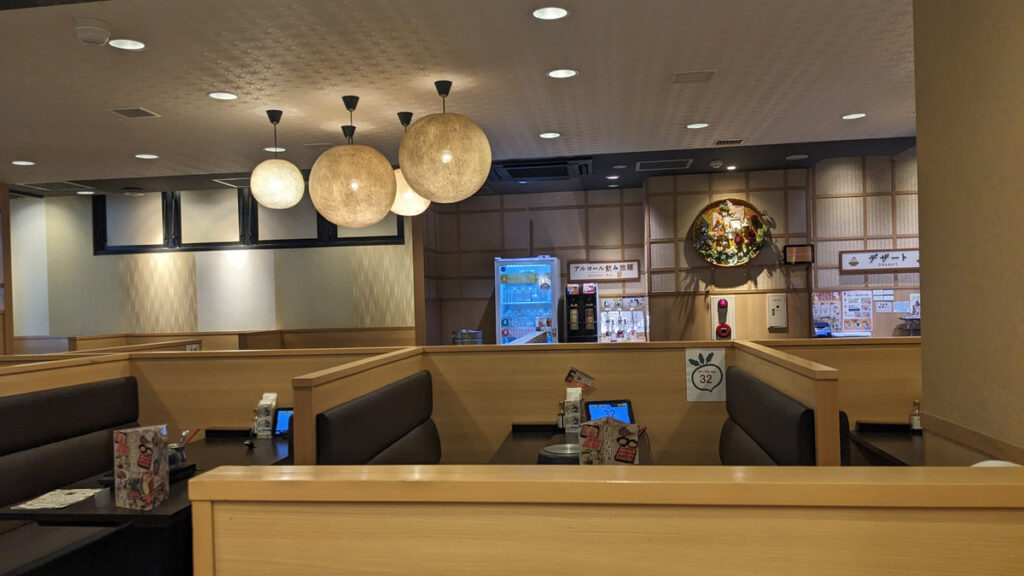
    Generally, they can be divided into two categories:

    1. All-you-can-eat shabu-shabu restaurants

    These are the easiest option for families and first-time visitors.

    Shabu-Yo

    Shabu-Yo is one of the most popular family-friendly shabu-shabu chains in Japan.

    Why it is recommended:

    • Affordable prices
    • Tablet ordering (easy even for visitors)
    • Large vegetable bar
    • All-you-can-eat meat and vegetables
    • Casual atmosphere

    It is a great choice if you want to try shabu-shabu without worrying about the menu.

    On-Yasai

    On-Yasai is another popular all-you-can-eat shabu-shabu chain.

    Compared with Shabu-Yo:

    • The atmosphere is a little more relaxed
    • Staff usually bring ingredients to your table instead of having you pick everything up yourself
    • Prices are slightly higher

    It is a good choice for families who want a more comfortable dining experience.


    2. Course-style shabu-shabu restaurants

    If you want higher-quality meat and a more traditional Japanese dining experience, course-style restaurants are a great option.

    However, some traditional restaurants may not be ideal for young children, so checking in advance is recommended.

    Kisoji

    Kisoji is a well-known shabu-shabu restaurant that offers course meals.

    It is recommended because:

    • Families are welcome
    • Some locations have private rooms
    • The atmosphere is more traditional
    • Good-quality meat is available

    Ume-no-Hana

    Ume-no-Hana is not a shabu-shabu specialty restaurant, but it offers shabu-shabu along with traditional tofu-based Japanese cuisine.

    It is also known as a family-friendly restaurant with a calm atmosphere.


    Shabu-Shabu Is a Great First Japanese Food Experience
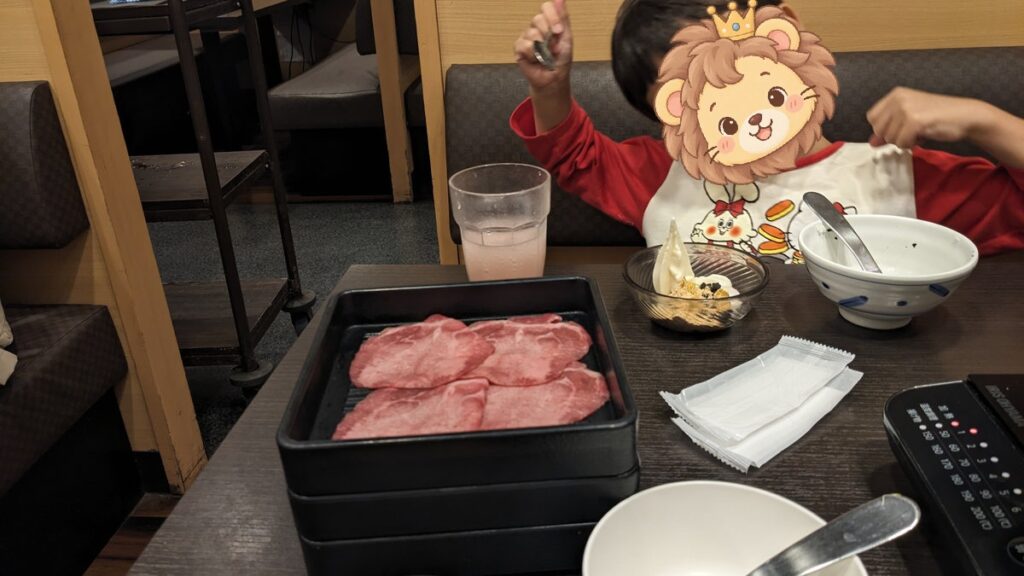
    For travelers trying Japanese food for the first time, shabu-shabu is one of the easiest choices.

    Why?

    • The flavor is mild and not too strong
    • You can choose what ingredients you like
    • Children can enjoy cooking their own food
    • Everyone can eat at their own pace

    For children, watching meat and vegetables cook right in front of them can feel like a fun activity rather than just a meal.


    Tips for Enjoying Shabu-Shabu

    Use separate chopsticks for raw meat

    When adding raw meat to the hot pot, use the provided cooking chopsticks or dedicated utensils.

    Do not use your personal eating chopsticks for raw meat.


    Add rice or noodles at the end
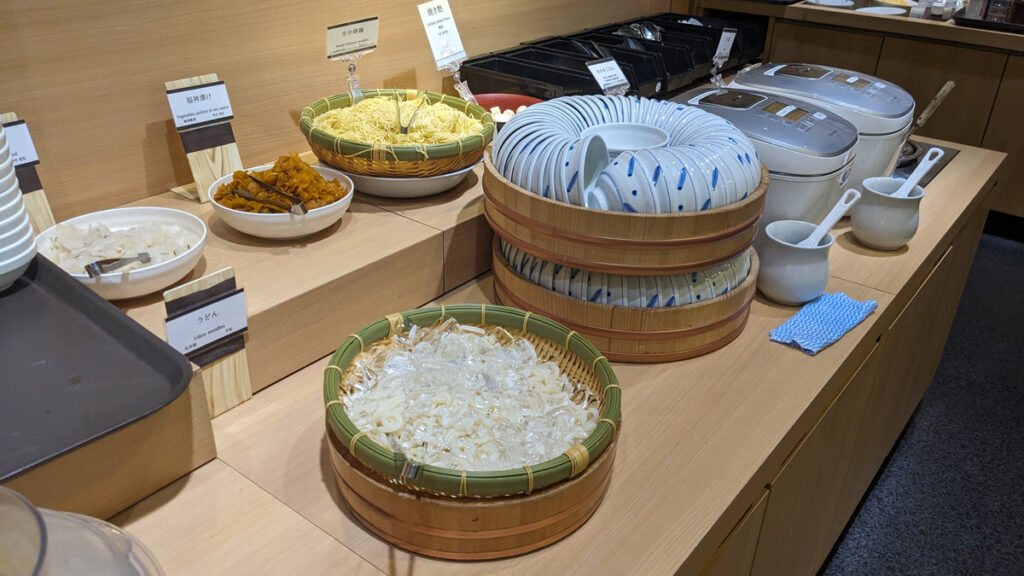
    After finishing the meat and vegetables, many Japanese people enjoy adding:

    • Rice
    • Udon noodles

    to the remaining soup.

    The broth becomes full of flavor and makes a delicious final dish.


    Make reservations for popular restaurants

    For restaurants such as Kisoji or Ume-no-Hana, reservations are recommended, especially:

    • Weekends
    • Holidays
    • Dinner time

    Some restaurants may be fully booked if you visit without a reservation.


    Be careful with children around the hot pot

    The pot and cooking equipment are placed on the table, so young children should be supervised.

    For families with toddlers, restaurants with larger tables or private rooms can make the experience more comfortable.


    Final Thoughts

    Shabu-shabu is more than just a meal — it is a fun Japanese dining experience.

    Cooking your own food at the table, choosing your favorite ingredients, and sharing a hot pot together makes it a memorable activity for the whole family.

    If you are looking for a Japanese meal that both adults and children can enjoy, shabu-shabu is definitely worth adding to your Tokyo travel itinerary.

    If you’re staying near Tokyo Disney Resort, we also recommend Shabu-Yo in our family-friendly restaurant guide to Kasai and Nishi-Kasai.
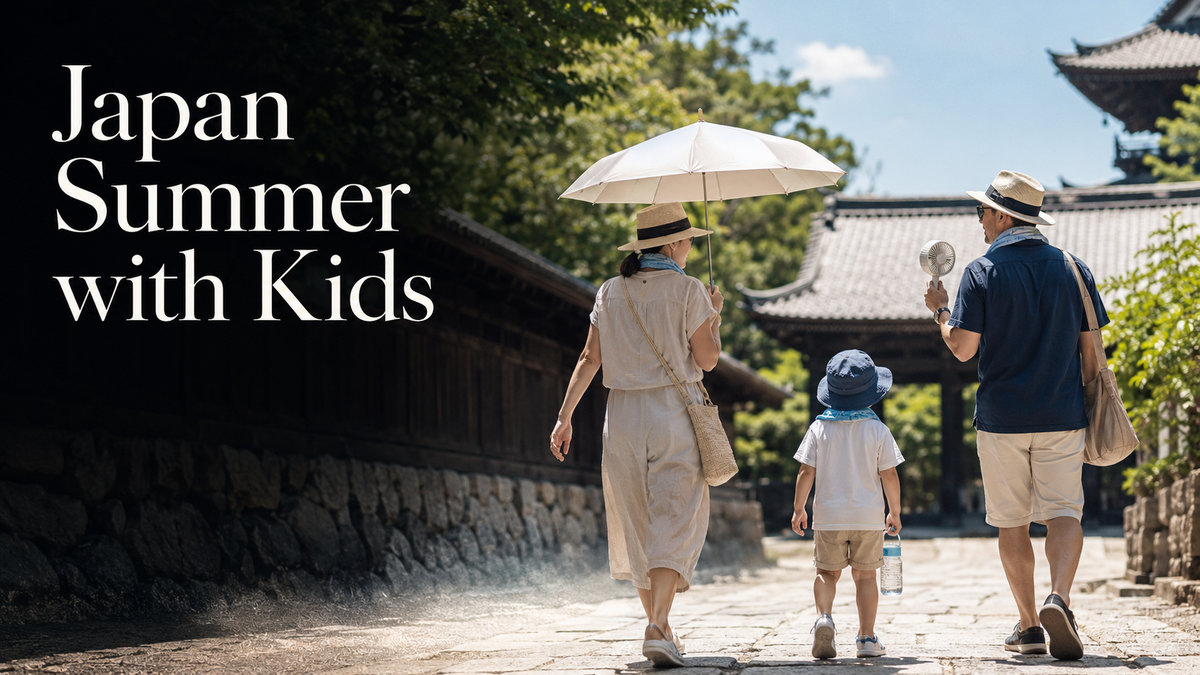
  • Japan Summer Travel with Kids: What Every Family Should Know Before Visiting

    Japan Summer Travel with Kids: What Every Family Should Know Before Visiting

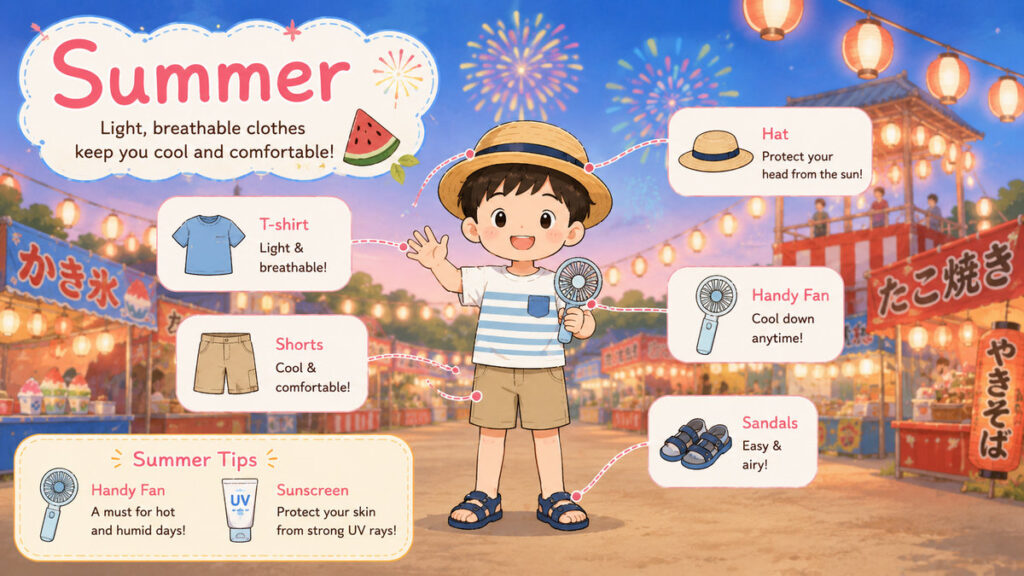
    Summer in Japan is full of exciting experiences, from colorful festivals to spectacular fireworks displays. However, one thing surprises many international visitors—the heat.

    You might think, “30°C (86°F) doesn’t sound too bad,” but Japan’s summer is extremely hot and humid, making it feel much hotter than the temperature suggests. Young children are especially vulnerable to heat exhaustion and heatstroke, so preparing for the weather is essential.

    As a parent raising a child in Japan, I rarely take my child to the park during the middle of a summer day because it’s simply too hot.

    In this guide, I’ll share what families should know before traveling to Japan during the summer, including how local families stay safe, what to pack, and the best ways to enjoy your trip.


    Japan’s Summer Is Hotter Than You Might Expect

    Summer in Japan (July through September) is known for its high temperatures and high humidity.

    In Tokyo, it’s common to experience:

    • Temperatures above 35°C (95°F)
    • Humidity levels of 70–90%
    • Tropical nights when temperatures stay close to 30°C (86°F) even after sunset

    Because the humidity is so high, sweat doesn’t evaporate easily, making the heat feel much more intense than in dry climates.

    Many visitors are surprised by how quickly they start sweating, even after walking for just a few minutes.

    If you’re traveling with young children, keep in mind that they are closer to the ground, where temperatures are even hotter because of heat radiating from the pavement.


    How Do Japanese Children Spend the Summer?

    In many countries, summer vacation means spending the entire day outdoors.

    In Japan, however, most families avoid outdoor activities during the hottest part of the day.

    Instead, many spend time in air-conditioned places such as:

    • Shopping malls
    • Indoor playgrounds
    • Science museums
    • Aquariums
    • Libraries

    Even preschools and daycare centers sometimes cancel outdoor play or swimming lessons when the WBGT (Wet Bulb Globe Temperature) reaches unsafe levels.

    Another thing many visitors don’t expect is how hot playground equipment becomes. Metal slides, rubber flooring, and asphalt can become hot enough to cause burns. Children should avoid touching these surfaces with bare hands or sitting on them during the afternoon.

    Rather than planning outdoor sightseeing all day, it’s much more comfortable to spend the hottest hours indoors.


    The Best Daily Schedule for Summer Travel

    Planning your day around the heat can make a huge difference.

    Morning (7:00–10:00 AM)

    This is the coolest part of the day—although it can still be quite hot.

    If you’d like to visit places such as:

    • Parks
    • Shrines and temples
    • Asakusa
    • Outdoor sightseeing areas

    try to do so early in the morning.


    Midday (10:00 AM–4:00 PM)

    This is usually the hottest part of the day.

    It’s a good time to enjoy indoor attractions like:

    • Shopping malls
    • Aquariums
    • Museums
    • Indoor theme parks

    Having lunch or shopping during these hours helps you avoid the strongest heat.


    Evening

    Even after sunset, Tokyo can remain very warm.

    Evenings are perfect for:

    • Dinner
    • City views
    • Walking around illuminated areas

    However, don’t expect it to feel cool just because it’s nighttime. Many summer evenings remain hot and humid.


    Enjoy Japan’s Unique Summer Events

    Despite the heat, summer is one of the most exciting seasons to visit Japan.

    Fireworks Festivals (Hanabi)

    Large fireworks festivals are held all across Japan during the summer.

    Watching Japanese fireworks is an unforgettable experience, but popular events can become extremely crowded.

    If you’re traveling with small children, consider watching from a little farther away. You’ll still enjoy the fireworks while avoiding the largest crowds.


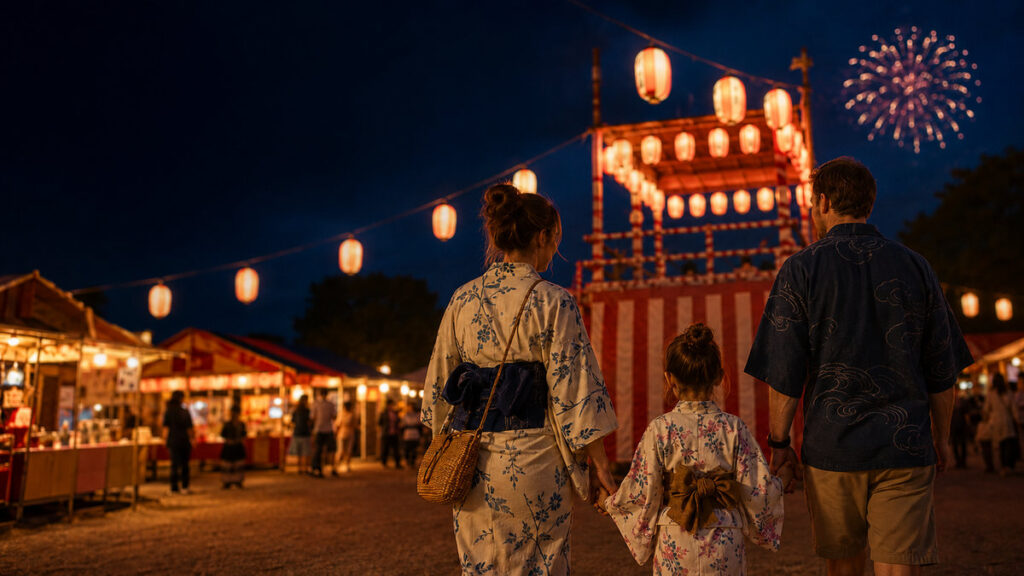
    Summer Festivals (Matsuri)

    Summer festivals are one of the best ways to experience Japanese culture.

    You’ll find food stalls selling favorites such as:

    • Takoyaki (octopus balls)
    • Yakisoba (fried noodles)
    • Kakigori (shaved ice)
    • Goldfish scooping
    • Water balloon games

    Many festivals welcome international visitors, making them a fun cultural experience for the whole family.

    One important tip: many food stalls only accept cash, so be sure to carry some Japanese yen if you plan to visit a festival.


    Bon Odori Dance Festivals

    Many neighborhoods also hold Bon Odori, traditional community dance festivals.

    Anyone is welcome to join, making it a wonderful opportunity to experience local Japanese culture alongside residents.


    Best Indoor Attractions for Families

    During Japan’s hottest months, combining sightseeing with indoor attractions is much more enjoyable than spending all day outside.

    Some of the best family-friendly indoor destinations around Tokyo include:

    Shopping malls are especially convenient because they also offer:

    • Nursing rooms
    • Baby changing facilities
    • Food courts
    • Children’s play areas

    making them excellent places to cool down during the day.

    If your family simply needs a quiet place to sit, eat, and cool down, Japanese karaoke can also be a surprisingly useful rest stop with kids.


    Strollers Can Get Surprisingly Hot

    A stroller is convenient, but it requires extra care during a Japanese summer.

    Because children sit much closer to the pavement, they are exposed to much higher temperatures than adults.

    Heat builds up because of:

    • Heat reflected from asphalt
    • Poor airflow inside the stroller
    • Hot air trapped around the seat

    Take frequent breaks and avoid leaving children in the stroller for long periods in direct sunlight.

    Many Japanese parents now use stroller cooling fans or cooling seat liners during summer.

    Some parents also place ice packs underneath the stroller seat or in the storage basket to help keep the stroller cooler.


    Baby Carriers Can Feel Even Hotter

    Baby carriers can become even warmer because the parent’s and baby’s bodies are in constant contact.

    Both babies and parents often sweat heavily.

    If possible:

    • Alternate between a stroller and a baby carrier
    • Take breaks indoors
    • Avoid carrying your baby for long periods outdoors

    Many parents also place a small cooling pack behind the baby’s back inside the carrier to help reduce heat buildup.


    Summer Packing List for Japan

    Here are some essentials to bring for a summer family trip.

    Heat Protection

    • Hat
    • Sunscreen
    • Sunglasses
    • Portable handheld fan
    • Cooling towel
    • Reusable water bottle
    • Frozen drinks (available at many convenience stores)

    For Children

    • 2–3 extra sets of clothes
    • Diapers
    • Baby wipes
    • Plastic bags
    • Small towels

    Rain Gear

    Summer is also rainy in Japan.

    It’s helpful to bring:

    • Foldable umbrella
    • Raincoat
    • Waterproof bag

    For more detailed clothing advice, see our month-by-month guide to what to wear in Tokyo.


    Don’t Worry If You Forget Something

    One of the great things about traveling in Japan is how easy it is to buy anything you need.

    You’ll find plenty of:

    • Convenience stores
    • Drugstores
    • UNIQLO
    • GU
    • 100-yen shops

    If you run out of children’s clothes, sunscreen, cooling products, drinks, or other daily necessities, you can easily buy them during your trip.

    There’s no need to overpack—many essentials are readily available throughout Japan.


    Final Thoughts

    Japan’s summer is beautiful, exciting, and full of unforgettable experiences—but it is also much hotter and more humid than many visitors expect.

    If you’re traveling with children, planning your day around the weather makes a huge difference. Spend the hottest hours indoors, stay hydrated, and take plenty of breaks.

    At the same time, don’t miss the chance to experience uniquely Japanese summer traditions such as fireworks festivals, matsuri, and Bon Odori.

    With the right preparation, your family can enjoy a fun, safe, and memorable summer vacation in Japan.

  • What to Wear in Tokyo by Month: A Complete Packing Guide for Families

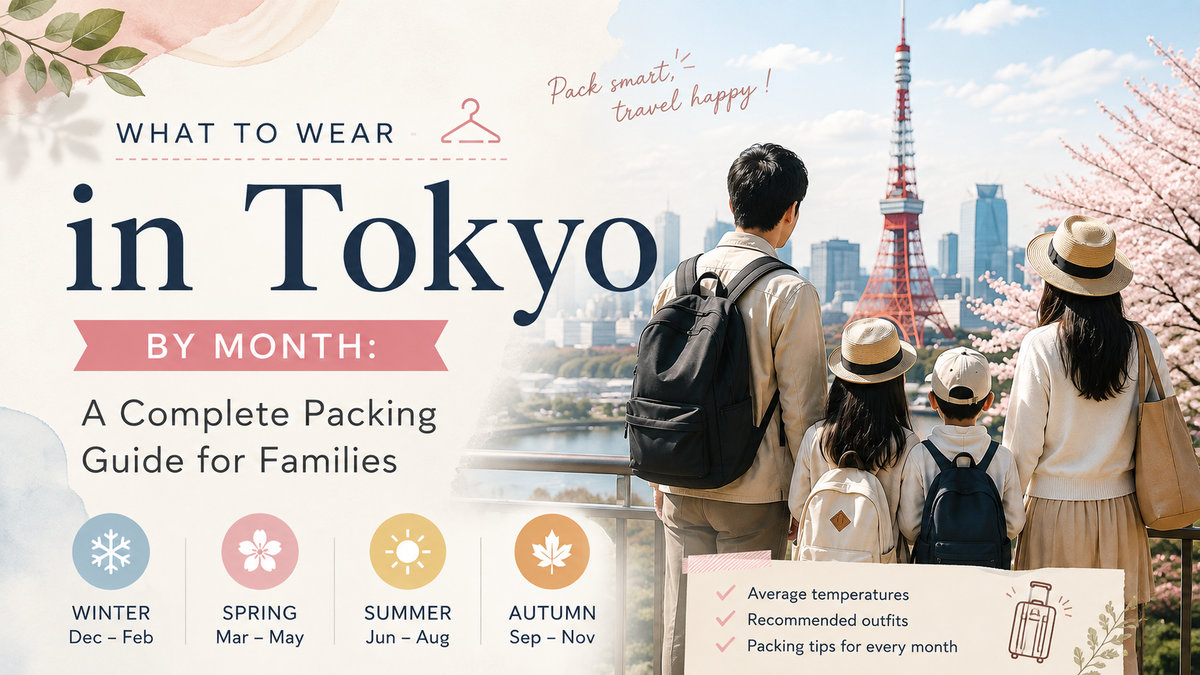
    What to Wear in Tokyo by Month: A Complete Packing Guide for Families

    Planning a trip to Tokyo and wondering what to pack?

    Many travelers ask questions like:

    • Can I wear short sleeves?
    • How cold is Tokyo in winter?
    • What should I pack for my kids?

    Tokyo has four distinct seasons, and the weather changes dramatically throughout the year. Summers are extremely hot and humid, while winters are cold and dry. Choosing the right clothing can make your trip much more comfortable—especially if you’re traveling with children.

    In this guide, you’ll find average temperatures, recommended clothing, and useful packing tips for every month of the year.


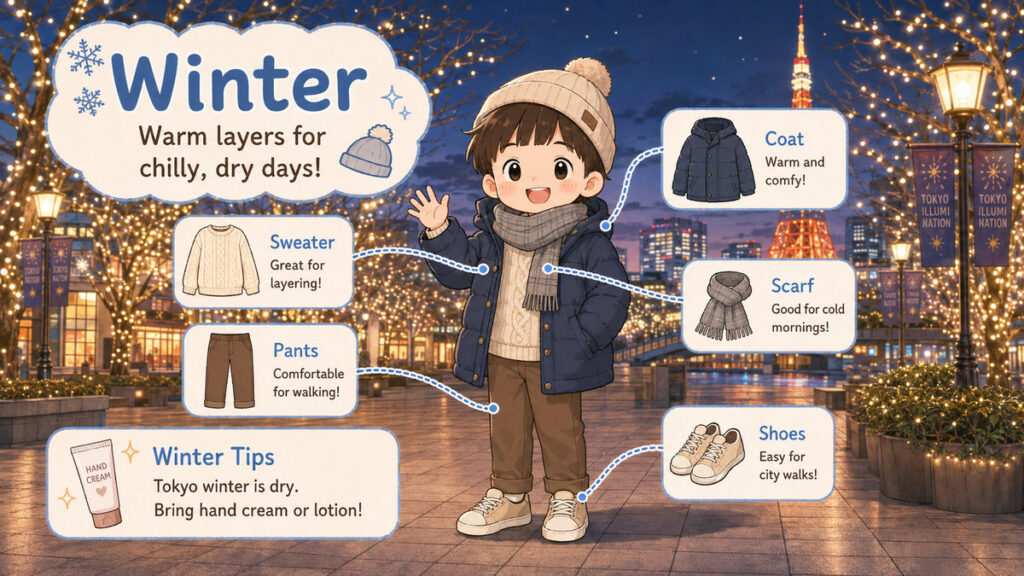
    January – Cold and Dry

    Average temperature: 2–10°C (36–50°F)

    January is usually the coldest month in Tokyo. Snow is rare, but mornings and evenings can feel very cold. The air is also quite dry, so moisturizing products are useful.

    If you find that the clothes you packed aren’t warm enough, don’t worry. You can easily buy UNIQLO HEATTECH thermal innerwear almost anywhere in Tokyo. HEATTECH Extra Warm can be especially helpful on colder days.

    One thing many visitors don’t expect is that trains, shopping malls, department stores, and hotels are usually very well heated. Wear layers so you can easily take off your jacket indoors.

    Recommended clothing

    Adults

    • Down jacket or warm winter coat
    • Sweater
    • Long pants
    • Sneakers or boots

    Children

    • Down jacket
    • Gloves
    • Scarf
    • Knit hat

    Useful items

    • Disposable hand warmers
    • Lip balm
    • Hand cream

    February – Still Cold

    Average temperature: 3–11°C (37–52°F)

    February feels very similar to January. Although some afternoons may be a little warmer, winter clothing is still necessary.

    If you’re spending several hours outdoors, young children can get cold quickly. Warm accessories such as gloves and hats are a good idea.

    Recommended clothing

    • Warm winter coat
    • Sweater
    • Long pants
    • Gloves or a hat for children

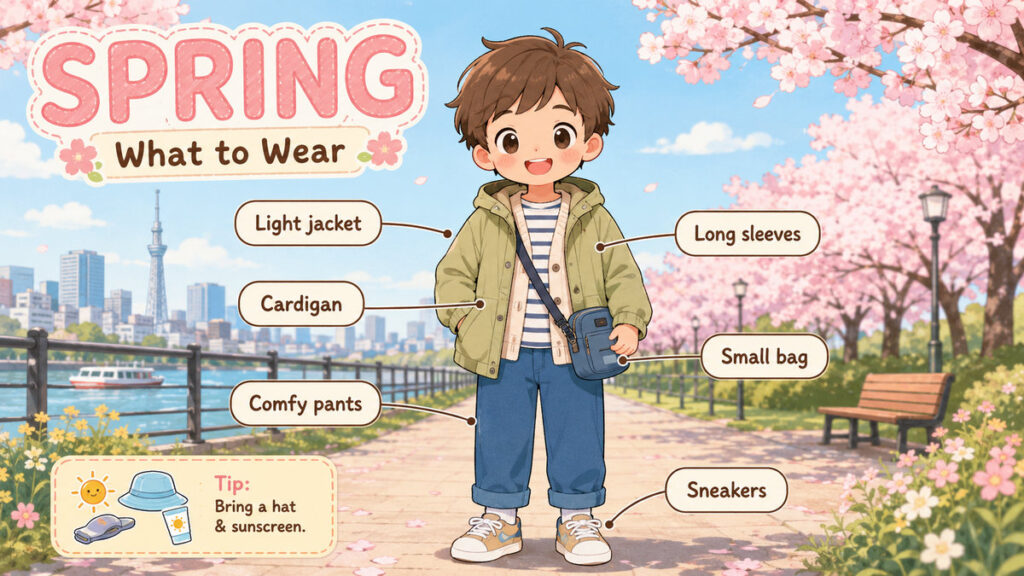
    March – Early Spring and Changing Temperatures

    Average temperature: 6–14°C (43–57°F)

    Spring begins in March, but temperatures can change a lot from one day to the next.

    Cherry blossom season also starts around this time, and many visitors spend hours outdoors enjoying the parks. Bringing an extra layer is a good idea, especially in the morning and evening.

    Recommended clothing

    Adults

    • Light down jacket
    • Trench coat
    • Cardigan

    Children

    • Hoodie
    • Light jacket

    April – Mild Spring Weather

    Average temperature: 11–19°C (52–66°F)

    April is one of the most comfortable months for sightseeing. The weather is mild, making it perfect for walking around parks, shopping streets, and popular attractions.

    Recommended clothing

    • Long-sleeve shirt
    • Cardigan
    • Light jacket

    Family travel tip

    Temperatures can drop after sunset, so carrying a light jacket is recommended.


    May – Warm and Comfortable

    Average temperature: 16–24°C (61–75°F)

    May is considered one of the best months to visit Tokyo. Humidity is still low, and sunny days are common.

    Short sleeves are comfortable during the day, but mornings and evenings can still feel cool.

    Recommended clothing

    • T-shirts
    • Long-sleeve shirts
    • Cardigan

    Useful items

    • Hat
    • Sunglasses
    • Sunscreen

    June – Rainy and Humid

    Average temperature: 20–27°C (68–81°F)

    June marks the beginning of Japan’s rainy season. Rain showers become frequent, and humidity rises quickly.

    Recommended clothing

    • T-shirts
    • Breathable clothing

    Useful items

    • Foldable umbrella
    • Rain jacket
    • Waterproof bag

    Family travel tip

    Children often get wet from both rain and sweat, so packing extra clothes is highly recommended.

    If rain changes your sightseeing plans near Tokyo Disney Resort, check out our guide to things to do near Tokyo Disneyland on a rainy day.


    July – Hot and Humid

    Average temperature: 24–32°C (75–90°F)

    July marks the start of Tokyo’s intense summer.

    If you’re visiting with children in July or August, read our complete guide to summer travel in Japan with kids.

    Many travelers only check the temperature before visiting Japan, but humidity is what surprises most people. Even 30°C (86°F) can feel much hotter than expected.

    Recommended clothing

    • T-shirts
    • Shorts or lightweight pants
    • Hat

    Useful items

    • Sunscreen
    • Portable fan
    • Cooling towel
    • Reusable water bottle

    Family travel tip

    Children sweat much more than adults, so bring two or three extra sets of clothes for each day.


    August – Peak Summer Heat

    Average temperature: 26–34°C (79–93°F)

    August is usually the hottest month in Tokyo.

    The combination of high temperatures and extreme humidity makes heatstroke a serious concern.

    Recommended clothing

    • T-shirts
    • Lightweight breathable pants
    • Hat

    Family travel tips

    Many Japanese families try to avoid spending long periods outdoors during the hottest part of the day.

    Japan sometimes issues official Heatstroke Alerts, advising people to avoid unnecessary outdoor activities because the heat can be dangerous.

    Many families spend the hottest part of the day in shopping malls, museums, aquariums, or indoor play centers with air conditioning.

    Even after sunset, temperatures often stay above 25°C (77°F). These “tropical nights” can still feel very hot, so don’t assume evenings are always comfortable.

    Some preschools and daycare centers even cancel outdoor pool time when temperatures become dangerously high.

    If you’re visiting Tokyo with children, it’s best to sightsee early in the morning or later in the evening and plan indoor activities during the hottest hours of the day.


    September – Still Hot with Typhoon Risk

    Average temperature: 23–30°C (73–86°F)

    Although September is technically autumn, Tokyo often remains very hot.

    Some days are still too hot for comfortable sightseeing outdoors.

    Short sleeves are often comfortable during the day, but September is also typhoon season.

    Major typhoons can temporarily suspend trains and buses, and some attractions may close for safety reasons. Always check the weather forecast during your trip.

    Recommended clothing

    • T-shirts
    • One light long-sleeve layer

    Useful items

    • Foldable umbrella
    • Rain jacket

    October – Mild Autumn Weather

    Average temperature: 17–24°C (63–75°F)

    October offers pleasant temperatures and comfortable walking weather.

    Halloween decorations appear throughout the city, especially in shopping malls and popular neighborhoods, making it a fun time to explore Tokyo.

    Recommended clothing

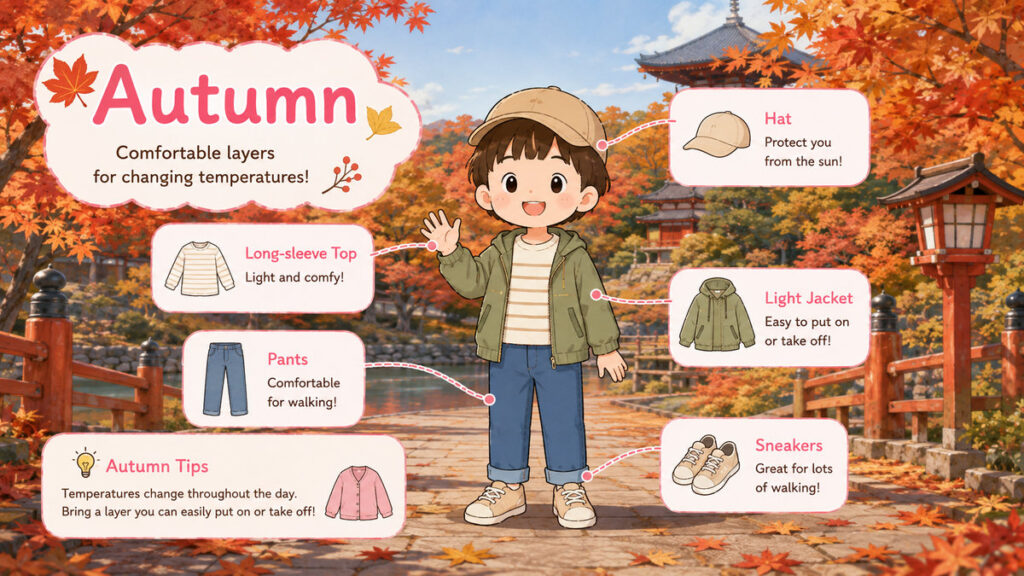
    • Long-sleeve shirt
    • Cardigan
    • Light jacket

    November – Cooler Days and Autumn Colors

    Average temperature: 11–18°C (52–64°F)

    November is one of the best months for autumn leaves.

    Mornings and evenings become chilly, so a light coat is recommended.

    Recommended clothing

    • Long-sleeve shirt
    • Jacket
    • Light coat

    December – Cold Winter Weather

    Average temperature: 5–13°C (41–55°F)

    Tokyo becomes festive with Christmas lights and winter illuminations.

    Evenings are cold, so warm clothing is essential.

    Recommended clothing

    • Down jacket
    • Sweater
    • Long pants
    • Scarf

    Family Packing Checklist

    No matter what season you visit, these items are useful when traveling with children:

    • Extra clothes (1–2 additional sets)
    • Hat
    • Foldable umbrella
    • Small towel
    • Reusable water bottle
    • Sunscreen
    • Portable charger
    • Wet wipes
    • Plastic bags

    In summer, portable fans and cooling towels are especially helpful. In winter, disposable hand warmers are inexpensive and can be found at almost any convenience store.

    If you need additional clothing during your trip, don’t worry. Stores like UNIQLO, GU, and children’s clothing retailers are easy to find throughout Tokyo.


    Final Thoughts

    Packing for Tokyo is mostly about preparing for the season while keeping some flexibility.

    When traveling with children, layers, extra clothes, and weather-appropriate accessories can make sightseeing much more comfortable. Check the latest weather forecast shortly before your trip, especially during the rainy season, summer heat, and typhoon season.

    With a little preparation, your family can enjoy Tokyo comfortably at any time of year.